



By Marion Kabagenyi
Economic hardship and work-related stress are among the leading factors contributing to teacher deaths in Uganda, with 535 teachers reported to have died last year, according to Uganda National Teachers Union (UNATU) Secretary General Philbert Baguma Baite.
Baguma said 412 of the deceased teachers were men and 123 were women, highlighting what he described as the heavy economic and social pressures faced by teachers, particularly men.
“The whole of last year, 535 teachers died, of whom 412 were males and 123 were female teachers. From this, you can understand the burden male teachers are going through,” Baguma said.
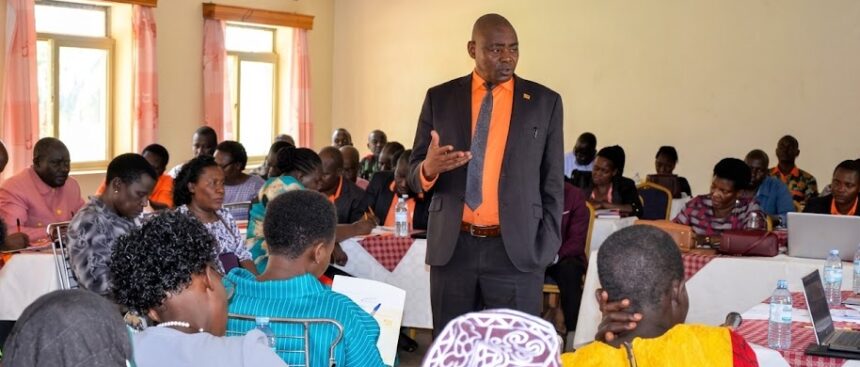
He was speaking on August 19, 2026, while addressing primary and secondary school head teachers in Masindi during a performance management training organised by UNATU at Biija Hotel.
Baguma attributed many of the deaths to economic pressures and the resulting health problems, saying teachers were increasingly struggling to live within their means.
He urged head teachers to sensitise their staff about financial discipline and responsible lifestyles, warning that excessive financial pressure can contribute to stress and illness.
“Some of our members are dying as a result of stress. The emotional and physical fear we get affects us a lot. Many have developed hypertension and diabetes because of the pressure they have to manage schools,” he said.
Baguma also raised concerns about the mental health of education managers, saying school administrators face pressure from multiple directions, including inspectors, local authorities, teachers, parents and learners.
He condemned incidents in which teachers and school administrators are physically assaulted, saying such behaviour undermines their dignity and creates an unhealthy working environment.
He called on head teachers to make defensible decisions, adhere to regulations and address problems in a timely and professional manner.
Baguma further cautioned school administrators against inflating enrolment figures and falsifying records, saying such practices create unnecessary pressure and could expose teachers to disciplinary action.
“If the school has 200 learners, let it be. Why add 150 learners who aren’t existing? Let’s not give ourselves the burden by forging these simple things because they don’t add anything to you,” he warned.
Sam Ayebale Peter, Principal Education Officer for Masindi Municipality, also criticised what he described as the growing humiliation of teachers, particularly when investigations or enforcement actions are conducted publicly.
“Teachers are getting humiliated in front of their clients as if they are not professionals. It’s very sad,” Ayebale said.
He said authorities should avoid acting solely on rumours and called for a better understanding of fluctuations in school enrolment before administrators are accused of wrongdoing.
Ayebale also raised concerns over inadequate government grants to schools, arguing that funding gaps continue to complicate school management.
He urged head teachers to comply with the Education Act and warned against sending learners away from school because of unpaid charges, saying children should not be punished for decisions made by adults.
Edward Kiirya, Deputy District Education Officer for Masindi, challenged head teachers to strengthen accountability and ensure school resources are properly managed.
The training also introduced head teachers to digital platforms providing updated public service standing orders and other guidelines to support informed decision-making.
Participants were further trained on performance management, including work planning, monitoring, assessment, review, evaluation, and the appropriate use of sanctions and rewards in schools.