



By Brian Mugenyi
Uganda’s education system must move beyond producing examination candidates and certificate holders and instead equip learners with practical skills, innovation, entrepreneurship and a stronger sense of patriotism, Dr. Ruth Aisha Biyinzika Kasolo has said.
Speaking at the 2nd International Conference on Curriculum Development at Speke Resort Munyonyo in Kampala, Kasolo challenged the government to redesign education around the skills young people need to survive and thrive in a rapidly changing economy.
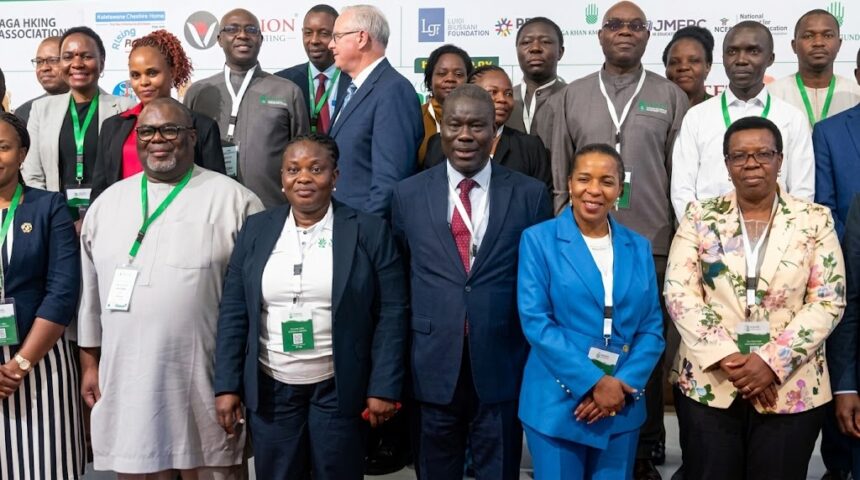
The conference, organised by the National Curriculum Development Centre, attracted more than 400 delegates from Uganda and abroad, including scholars and education experts from institutions such as Kabale University and Kampala University, as well as participants from Malaysia and the United States.
Kasolo said the success of education should not be measured only by performance in examinations, but by what learners can do after leaving school.
“What happens when a learner leaves school? What can that young person create, repair, design, produce or solve?” she asked, arguing that graduates should be capable of earning a living, starting businesses and contributing to national development.
She also called for the restoration of patriotism in Uganda’s education system, warning that the country risks losing professionals who are committed to serving their communities and nation.
“The patriotic people in different professions have been lost. We used to have teachers, doctors who were passionate and hard working,” Kasolo said.
Her remarks link curriculum reform to Uganda’s wider challenge of youth unemployment, productivity and economic transformation. With a predominantly young population, she argued, Uganda must ensure that education becomes a pathway to productive employment and enterprise rather than prolonged job searching.
Kasolo urged schools and universities to strengthen hands-on training, digital skills and entrepreneurship. She said learners should continuously add complementary skills instead of relying on one qualification.
“If you know typing, kindly I argue you to know more skills. Be more into other things and learn from skilled people in business and be entrepreneurs,” she said.
She also challenged universities and other higher education institutions to reconsider academic programmes that have little connection to employment opportunities.
“We should get away from the traditional way of score in the curriculum and advocate for courses that have observable jobs for the learners,” she said.
Kasolo further called for increased investment in continuous professional development for teachers, arguing that educators cannot effectively prepare learners for a changing labour market if they are not themselves regularly trained.
She also stressed the importance of early-childhood development, saying Uganda’s human-capital development must begin long before learners reach secondary school or university.
Kasolo’s professional background gives added weight to her argument.
She coordinates the World Bank-funded Generating Growth Opportunities and Productivity for Women Enterprises (GROW) Project, implemented through the Private Sector Foundation Uganda and the Government of Uganda. She has more than two decades of experience in private-sector development, human capital, skills development, women’s empowerment and economic transformation.
She is also a member of the governing council of the National Curriculum Development Centre.
The conference, held under the theme “Innovative Curriculum Approaches for Sustainable Education in a Global World,” comes as technology, business models and workplace requirements continue to change.
For Kasolo, Uganda’s education system must therefore produce more than graduates who can pass examinations. It must produce problem-solvers, innovators, entrepreneurs, skilled workers and responsible citizens.
Her challenge to government is ultimately about reconnecting education with Uganda’s economic future.
The central question, she suggested, is no longer simply whether Ugandans are going to school, but what kind of citizens and workers the education system is producing.