



As Uganda prepares for the second National Cleaning Day on Saturday, August 29, 2026, the Ministry of Health is stepping up efforts to encourage households and communities to rethink how they handle waste, with officials warning that poor disposal practices are increasingly becoming a public health threat.
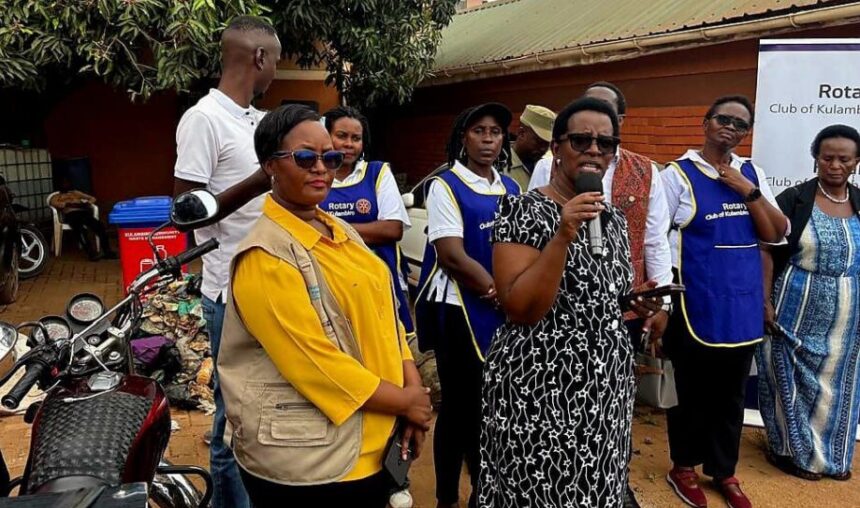
The campaign, which was taken to Kulambiro in Kampala, is encouraging residents to separate waste at source, avoid burning garbage and use authorised waste collectors to ensure refuse is disposed of safely.
The National Cleaning Day, declared by government to take place on the last Saturday of every month, is intended to improve sanitation and encourage communities to take greater responsibility for their surroundings.
During the sensitisation exercise, Ministry of Health Permanent Secretary Dr Diana Atwine urged residents to stop treating all waste as garbage and instead separate materials that can be recycled, reused or turned into useful products.
Residents were encouraged to keep plastics, including water and soda bottles, separate from biodegradable waste such as food remains, banana leaves and other organic materials.
The plastics can then be collected by recycling companies, creating an opportunity for households and communities to earn income, while organic waste can be composted or used to produce manure and other useful products.
Officials said the approach is based on the principles of refuse, reduce and recycle, which can significantly reduce the amount of waste ending up in landfills.
In Nakawa East and Nakawa West, EcoServe, an authorised waste collection company working on behalf of Kampala Capital City Authority, is supporting efforts to improve waste sorting at household level.
The Director, Hudson Arinaitwe, cautioned residents against burning garbage, particularly waste containing plastics. Burning such materials releases harmful pollutants into the atmosphere and can expose communities to respiratory illnesses and other serious health complications.
“Let us protect ourselves by not burning waste,” he urged residents, emphasising that proper sorting and disposal can help reduce health risks.
The campaign also comes amid continuing concerns over the capacity of Kampala’s waste disposal system following the Kiteezi landfill disaster, which claimed lives and exposed weaknesses in waste management.
Arinaitwe, said separating waste at source would reduce the volume of garbage transported to disposal sites, including the new Buyala waste disposal site.
Residents were also advised against handing their waste to informal collectors who may lack the capacity or authorisation to transport it to designated disposal facilities.
He warned that some waste collected by tuk-tuks and wheelbarrows can end up being illegally dumped in drainage channels, vacant spaces and other hidden locations, allowing it to return to communities through flooding, wind and other environmental processes.
Instead, residents were encouraged to hand waste to authorised collection trucks operating on designated routes.
The government is also introducing technology to improve waste collection and communication with residents. Officials said an IT system is being developed to track clients, record complaints and improve coordination between waste collectors and households.
Residents will also be able to use the Oyonje and Toa Uchaf applications to identify waste collectors operating in their areas and arrange for recyclable materials to be collected.
Acting Director of Public Health and Environment at the Kampala Capital City Authority(KCCA) Sarah Zalwango said a mapping exercise is underway to identify waste entrepreneurs so that residents can easily find authorised collectors in their neighbourhoods.
She also urged residents to make use of scheduled collection routes and contact waste collection teams when they miss a collection.
The message from the Ministry of Health is that keeping waste inside a home until it is collected is safer than dumping it on roadsides.
Officials said roadside dumping exposes waste to rain and sunlight, which can spread pollutants back into communities and contribute to poor air quality.
With the second National Cleaning Day approaching, government is calling on households, businesses, markets and institutions to make proper waste management a daily responsibility rather than an activity reserved for one day each month.
The campaign, officials said, is ultimately about protecting public health, creating economic opportunities from recyclable materials and building cleaner communities across Uganda.