



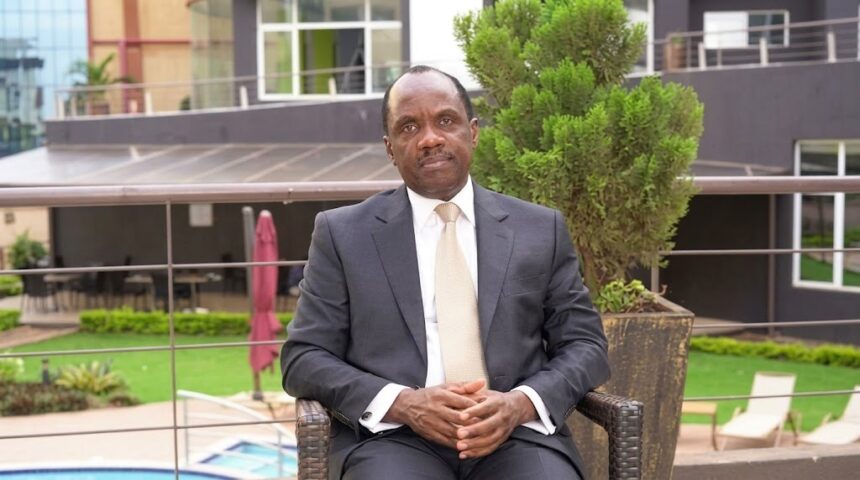
Prominent Ugandan businessman Patrick Bitature has been ordered to pay more than Shs955 million to architectural firm Finicon Uganda over professional services provided for two property projects nearly 14 years ago—a liability that has since grown to almost Shs2 billion with interest.
The judgement by Justice Stephen Mubiru brings into focus the financial risks that can arise when major property developments stall after substantial professional work has already been completed.
The dispute dates back to 2012, when Bitature engaged Finicon to design a high-end boutique hotel on Summit View Road in Kololo, Kampala. The proposed development was estimated to cost between Shs18 billion and Shs22 billion, with Finicon entitled to a consultancy fee equivalent to 5% of the project cost.
A second contract was signed on August 24, 2012, for the remodelling of Bitature’s residence on Malcolm X Road in Kololo, also at a 5% consultancy fee.
Finicon told court that it undertook substantial work on both assignments, including feasibility studies, schematic and production drawings, regulatory approvals and development applications.
For the hotel project, the firm secured approval from the National Environment Management Authority and worked with Kampala Capital City Authority on development permission.
It also organised competitive tendering, with contractors including CATIC, Seyani Brothers and Roko invited to bid.
But the projects eventually stalled before construction reached the stage where final bills of quantities were produced.
Finicon claimed it had completed about 76% of its contractual obligations, entitling it to approximately Shs1 billion in fees. Bitature paid Shs87 million.
The unpaid balance ultimately became the subject of litigation filed in December 2018.
Finicon, represented by Blair & Co Advocates, argued that the contracts clearly established its entitlement to fees and that Bitature’s partial payment demonstrated that he had accepted the contractual relationship.
Bitature’s lawyers at ENSafrica Advocates challenged that position, arguing that the fee provisions were too vague to enforce because the projects never reached the stage at which final project costs could be established.
His lawyers also questioned Finicon’s legal standing, arguing that the contracts had been signed by an individual architect, Angiletti, rather than Finicon itself.
They further raised allegations concerning the registration status of Finicon’s directors at the time.
The court ultimately ordered payment of more than Shs955 million. Justice Mubiru also awarded interest at 9% per annum from May 2014, significantly increasing the financial exposure over more than a decade.
The case illustrates how large developments can generate substantial professional liabilities long before a building is completed and the importance of precisely defining fee structures, project milestones, termination provisions and payment obligations when developments are abandoned or substantially altered.