



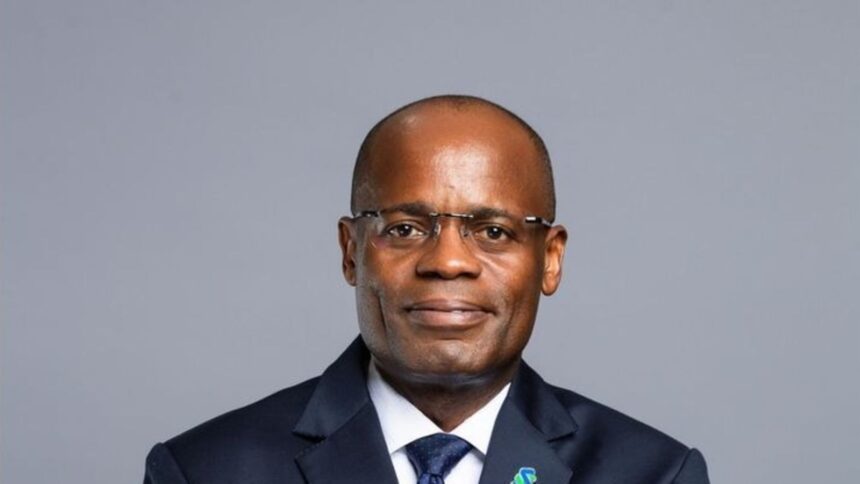
In a major shake-up within East Africa’s corporate banking ecosystem, Standard Chartered Bank Tanzania has confirmed that its veteran Chief Executive Officer and Head of Coverage, Herman Kasekende, officially stepped down on May 26, 2026.
The bank moved swiftly to maintain continuity, appointing Geofrey Mchangila—the highly regarded former CEO of Citibank Tanzania and vice chairperson of the Governing Council of the Tanzania Bankers Association—as his successor.
Kasekende’s departure ends a distinguished regional career spanning more than two decades with the British multinational lender. He leaves behind a legacy defined by infrastructure mega-deals, pioneering small-and-medium enterprise (SME) banking centers, and a radical corporate restructuring that reshaped the bank’s footprints in East Africa.
As the industry reflects on the end of an era in regional banking leadership, a pressing question dominates executive boardrooms from Kampala to Dar es Salaam: Where is Herman Kasekende headed next?
The Legacy Behind the Departure: Mission Accomplished in Tanzania
To understand Kasekende’s next logical move, one must analyze the strategic “mission accomplished” state in which he leaves Standard Chartered Tanzania.
Kasekende took the helm of the Tanzanian franchise in July 2022, focusing intensely on sustainable growth, financial inclusion, and high-value corporate financing. His tenure was defined by two massive milestones:
- The $2.33 Billion SGR Mega-Deal: Under his leadership, Standard Chartered secured a monumental $2.33 billion financing arrangement for the expansion of Tanzania’s Standard Gauge Railway (SGR), cementing investor confidence in the country’s cross-border logistics infrastructure.
- The Retail-to-Corporate Pivot: Kasekende successfully engineered a complex transition, overseeing the transfer of Standard Chartered’s wealth and retail banking business to Access Bank PLC. This effectively exited the bank from consumer banking in Tanzania, streamlining it into a lean, highly profitable corporate and investment banking powerhouse.
With the retail divestment finalized and the corporate infrastructure machinery running seamlessly, analysts note that Kasekende has effectively checked every box on his institutional mandate.
Analysis: Where is Herman Kasekende Headed Next?
Given his deep macro-economic expertise, unmatched regional network, and history of breaking institutional glass ceilings—including becoming the very first Ugandan CEO of Standard Chartered Uganda back in 2012—Kasekende’s next move will undoubtedly be high-impact.
Insiders and banking analysts point toward three highly probable paths for the veteran economist and executive:
1. A High-Profile Return to Uganda (The Central Bank Speculation)
Whispers in Kampala suggest that Kasekende may be returning home to take up a macro-critical governance role. Having spent years developing local talent, chairing the Oil and Gas Technical Working Group under Uganda’s Presidential Investors’ Round Table (PIRT), and advising the Chamber of Mines and Petroleum, Kasekende possesses the precise technocratic blueprint required for top-tier public financial governance.
With Uganda entering a critical economic phase driven by imminent first-oil revenues, Kasekende’s name is increasingly entering conversations regarding senior leadership or advisory roles within the Bank of Uganda (BoU) or state economic planning agencies.
2. A Pan-African Development Finance Institution (DFI)
Having successfully structured multi-billion-dollar sovereign infrastructure deals like Tanzania’s SGR, Kasekende is uniquely positioned for a transition into continental development finance. Institutions such as the African Development Bank (AfDB), the Trade and Development Bank (TDB), or Africa Finance Corporation (AFC) are constantly hunting for battle-tested East African executives who understand how to de-risk public-private infrastructure partnerships.
A senior regional director or vice-presidential role at a major DFI would perfectly match his career trajectory.
3. A Sovereign Wealth or Private Equity Leadership Role
Across East Africa, sovereign wealth funds and private equity firms are expanding their portfolios into energy, logistics, and digital infrastructure. Kasekende’s deep understanding of corporate coverage, combined with his extensive tenure in Singapore, Nairobi, Lusaka, and Dar es Salaam, makes him an invaluable asset for an international private equity fund looking to anchor its Sub-Saharan Africa expansion.
The Road Ahead for Standard Chartered Tanzania
While the industry monitors Kasekende’s next chapter, Standard Chartered Tanzania is entering a heavily localized phase. By tapping Geofrey Mchangila from Citibank, the bank has chosen a leader with deep corporate roots and a thorough understanding of Tanzania’s evolving regulatory environment.
Mchangila will take charge of one of the country’s oldest international banking franchises, aiming to steer its newly streamlined corporate business model against intensifying competition.
As for Kasekende, whether he steps into public governance, takes a continental desk at a DFI, or transitions into private equity, his departure from Dar es Salaam marks less of a retirement and more of a strategic pivot.
For an executive who has spent over twenty years reshaping international banking in Africa, the next chapter promises to be just as transformative.