



Uganda’s transition to digital public procurement is fundamentally changing how government entities advertise tenders, evaluate bidders and award contracts, with officials saying the new system will reduce human intervention while strengthening accountability.
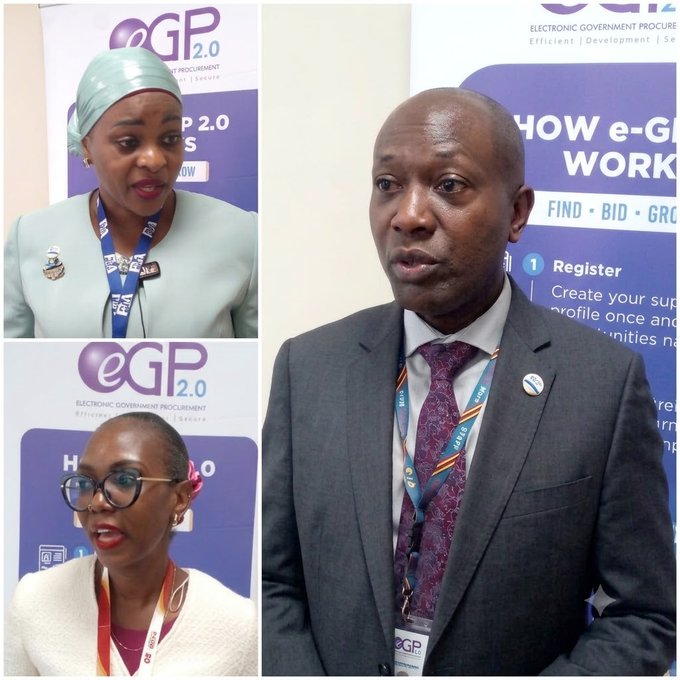
Acting Accountant General Godfrey Ssemugooma says manual procurement processes have traditionally relied on paper documents, physical bid submissions, face-to-face evaluations and handwritten contract approval procedures that not only consume time but also create opportunities for document manipulation, preferential treatment and limited oversight.
By digitising every stage of procurement, the government hopes to eliminate many of these vulnerabilities.
“Like all electronic systems, every time you automate, you minimise human contact. Human contact in these processes breeds corruption. When you cut people out of the process and embed the rules into the system, if you are not eligible—for instance, if you have no tax clearance or are not registered with URSB—the system will not allow you to bid,” Ssemugooma remarked.
The system automatically verifies bidders’ compliance by linking directly with institutions such as the Uganda Revenue Authority (URA), Uganda Registration Services Bureau (URSB), National Identification and Registration Authority (NIRA), and the National Social Security Fund (NSSF).
Companies that lack mandatory compliance documents are automatically excluded, eliminating opportunities to submit forged certificates or negotiate exceptions through manual processes.
“In a manual environment, it’s possible to talk to someone and attach a forged document, and it will go through. This electronic system is very intelligent. If there is a document that we need, you don’t need to talk to anyone. The system will automatically either include you or exclude you,” Ssemugooma added.
The automation is intended to make compliance a prerequisite rather than a matter that can be negotiated during the procurement process.
The greatest beneficiaries are likely to be legitimate businesses, particularly small and medium-sized enterprises (SMEs), which have often struggled to compete against larger firms with stronger networks or greater familiarity with manual procurement procedures.
Under the digital system, suppliers can access tender opportunities from anywhere in the country, submit bids electronically and monitor procurement processes without travelling to government offices.
This significantly lowers transaction costs while expanding competition for public contracts.
For businesses outside Kampala and other major urban centres, the shift could reduce the cost and logistical burden associated with physically submitting tender documents to government offices.
Government agencies also stand to benefit from faster procurement cycles.
Hermione Nakabugo, Executive Assistant to the Chief Executive Officer at the Capital Markets Authority, revealed that procurement timelines under the electronic platform have already been shortened, with some processes expected to take nearly half the time previously required.
Activities such as Contracts Committee meetings, bid evaluations and approvals can now be conducted remotely, eliminating delays caused by scheduling physical meetings and manually circulating documents.
“In cases where we have low bidder participation, this is going to be much easier because we have access to the list of service providers under each category on the system. Service providers also have access to all bids being issued by government entities and can prepare accordingly to participate in the bidding processes,” she noted.
The electronic platform therefore provides both procuring entities and suppliers with greater visibility over available opportunities.
The reform could also strengthen fiscal accountability.
Unlike paper-based systems, every transaction on the electronic platform leaves a digital audit trail showing who performed each action and when it occurred.
Such transparency makes post-procurement audits easier and increases the likelihood that irregularities can be detected before public funds are lost.
The ability to track actions electronically could also make it easier for oversight institutions to identify where delays, unexplained changes or other irregularities occurred during the procurement cycle.
Uganda’s transition mirrors a broader global movement towards digital public procurement.
Countries such as South Korea have long been recognised as global leaders through the KONEPS electronic procurement platform, which has significantly reduced procurement costs and increased transparency.
Chile’s ChileCompra and Ukraine’s ProZorro systems have similarly demonstrated how digital procurement can widen supplier participation while reducing opportunities for corruption.
Within Africa, Rwanda has emerged as one of the continent’s digital procurement success stories through its Umucyo e-Procurement platform, while Kenya and Tanzania have also invested heavily in electronic procurement systems as part of broader public finance reforms.
Uganda’s phased implementation reflects lessons learned from these countries, where gradual adoption, extensive user training and institutional support proved more effective than rapid nationwide deployment, according to Mariam Baluka, Senior Procurement and Disposal Officer in charge of Capacity Building.
“We first on-boarded 36 government entities, and we are now adding another 100 entities. In the next financial year, we will add another 100 until all government entities are using the electronic government procurement system.”
Entities currently using the eGP 2.0 system are no longer permitted to advertise procurement opportunities in newspapers.
Instead, bidders interested in doing business with the existing 36 entities and the additional 100 entities being brought onto the system are urged to register on the platform and learn how to submit bids electronically.
“This is so that they are able to access government tenders. Entities using the system cannot award contracts to providers who are not registered on the platform because the system is designed to operate end-to-end. We advertise on the system, which means you must also submit your bid through the system. That requires you to be registered and activated on the same platform,” Baluka said.
This effectively makes registration and activation on the eGP 2.0 platform a requirement for suppliers seeking to participate in procurement processes conducted by entities using the system.
The government has sought to mitigate implementation risks by providing multi-level training for accounting officers, procurement professionals, departmental heads and private sector suppliers, alongside ongoing technical support after deployment.
However, technology alone cannot eliminate procurement challenges.
Successful implementation will depend on user adoption, digital literacy and reliable internet connectivity across government institutions and the private sector.
While officials say all government entities connected to the Integrated Financial Management System (IFMS) already have internet access, suppliers in remote areas may still face connectivity constraints that could limit participation if not adequately addressed.