



In politics, perception is often as powerful as policy. Across emerging economies, lavish displays of wealth by public officials increasingly shape how citizens judge leadership, accountability and trust.
In Uganda, the latest debate surrounding Speaker of Parliament Anita Among has once again highlighted how luxury spending can quickly become a political liability.
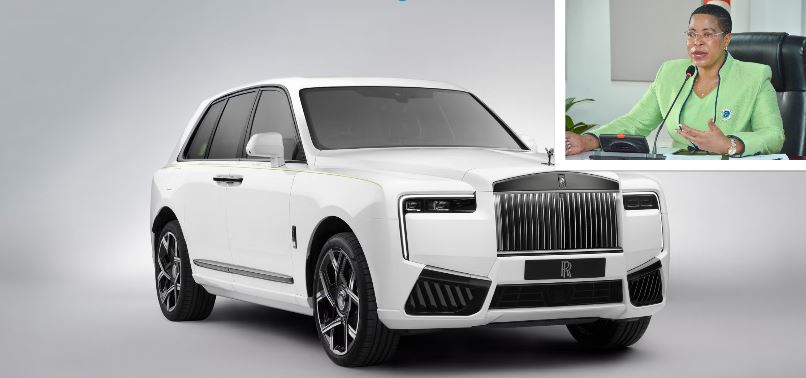
Last week, social media platforms erupted with discussions after reports emerged that Among had acquired a Rolls-Royce, one of the world’s most expensive luxury vehicle brands.
The controversy intensified days later when online commentators and political observers focused on her reportedly extravagant attire valued at approximately UGX 43 million during President Yoweri Museveni’s inauguration events.
The timing could not have been more politically sensitive.
Uganda continues to grapple with youth unemployment, high living costs and increasing public scrutiny over government expenditure. In such an environment, visible luxury by political leaders often creates a perception gap between leaders and ordinary citizens.
Analysts say that while wealth itself is not necessarily illegal or unethical, public officials are increasingly judged on symbolism, modesty and economic sensitivity.
For Among, the optics are particularly significant because she is widely viewed as positioning herself to retain leadership of Parliament in the next political cycle. Maintaining political capital requires not only institutional support but also public legitimacy.
Expensive purchases and high-end fashion displays risk alienating voters who expect restraint from leaders entrusted with public resources.
The situation became more notable after comments and actions linked to Chief of Defence Forces Gen. Muhoozi Kainerugaba, who also chairs the Patriotic League of Uganda (PLU).
Gen. Muhoozi Kainerugaba made several remarks on X that many Ugandans interpreted as indirect criticism of Speaker Anita Among amid backlash over her reported Rolls-Royce purchase and lavish public image.
Among the most widely shared posts were:
“I have been Mzee’s son for 52 years but I have never sat in a Rolls Royce ever. I don’t think Mzee has sat in one either.”
He also posted:
“Our job is to SERVE Ugandans not ourselves! I cannot support corruption! I risked my life to make this country peaceful. Now that it is, it will not be taken by thieves. Never!”
In another statement tied to Parliament spending, Muhoozi wrote:
“PLU believes in the reduction of ANY monies sent to Parliament. We believe in redirecting that money to the millions of Ugandans living in shacks, with no water or power.”
The Patriotic League of Uganda (PLU), chaired by Muhoozi, later formally withdrew its endorsement of Anita Among and Deputy Speaker Thomas Tayebwa for the next parliamentary leadership race.
Political observers interpreted recent messaging from Muhoozi’s camp as an attempt to distance himself from the Speaker amid growing online criticism. While no formal political fallout has been declared, the optics suggest a recognition within sections of the ruling establishment that public anger over perceived extravagance can carry political consequences.
President Museveni himself recently signaled growing concern over governance perceptions when he reportedly warned that he “does not want to hear corruption in Parliament again.” The statement has since gained renewed attention as discussions around accountability and elite spending intensify.
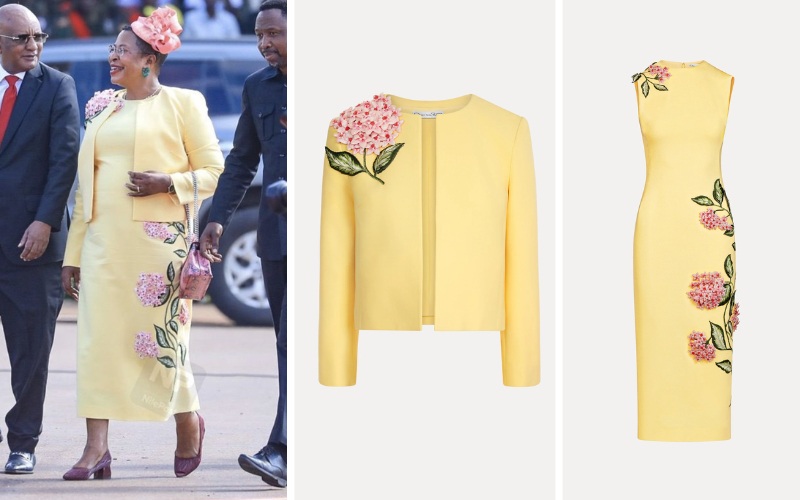
Yesterday, during President Museveni’s innauguration,Speaker Anita Among reportedly wore a luxury Oscar de la Renta outfit during President Museveni’s inauguration that sparked major public debate because of its estimated value.
According to reports, the ensemble included:
- A Porcelain Flower Embroidered Dress priced at about $6,490
- A matching embroidered cropped jacket valued at around $4,990
Combined, the outfit was estimated at approximately $11,480, translating to roughly UGX 42–43 million before accessories and taxes.
Globally, history shows that conspicuous consumption by politicians often damages political brands. From African governments to Western democracies, leaders seen as excessively extravagant during periods of economic strain frequently face declining approval ratings, reputational damage and weakened negotiating power within political circles.
In the digital age, luxury has become instantly visible. A designer outfit, luxury vehicle or lavish celebration can dominate online discourse within minutes, often overshadowing legislative achievements or policy messaging.
The unfolding debate around Anita Among may serve as a broader lesson that in modern politics, public image is no longer shaped only by speeches and policy positions. It is increasingly defined by lifestyle choices — and voters are watching more closely than ever.