


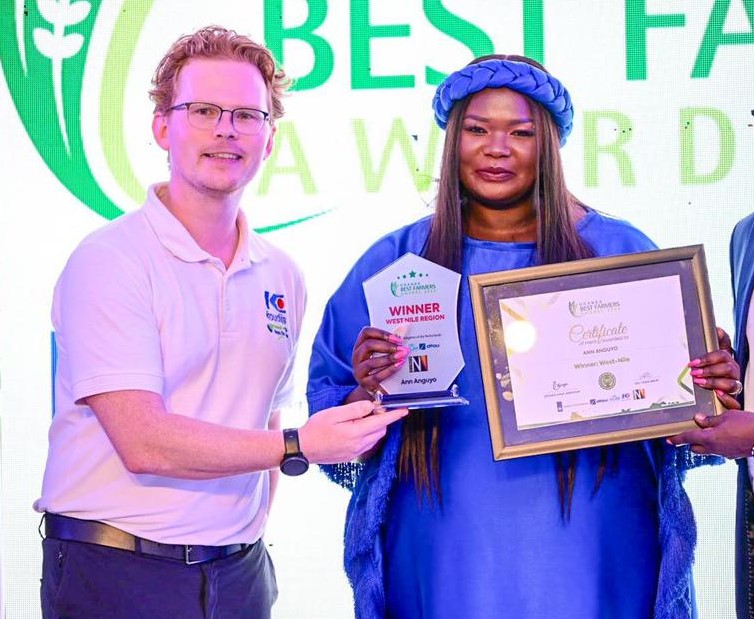
For Arua farmer Ann Anguyo, the 2025 Best Farmers Award was not a destination. It was a springboard to a more ambitious vision for commercial agriculture.
When Ann Anguyo received the 2025 Best Farmers Award, the UGX7 million prize was a welcome recognition of years of work in agriculture. But for the Arua-based farmer, its greatest value was in what it enabled her to do next.
She invested the award money, received through dfcu Bank, in chain-link fencing for a new farm—one of the first steps towards an ambitious poultry enterprise that she estimates will require close to UGX900 million in total investment.
Today, Anguyo is moving beyond small-scale production towards a more structured, technology-driven poultry business. Her plans include a facility with capacity for 60,000 layers, alongside an expanding broiler operation.
She currently produces about 1,000 broilers every two weeks and expects to introduce 10,000 layers as she continues building the enterprise.
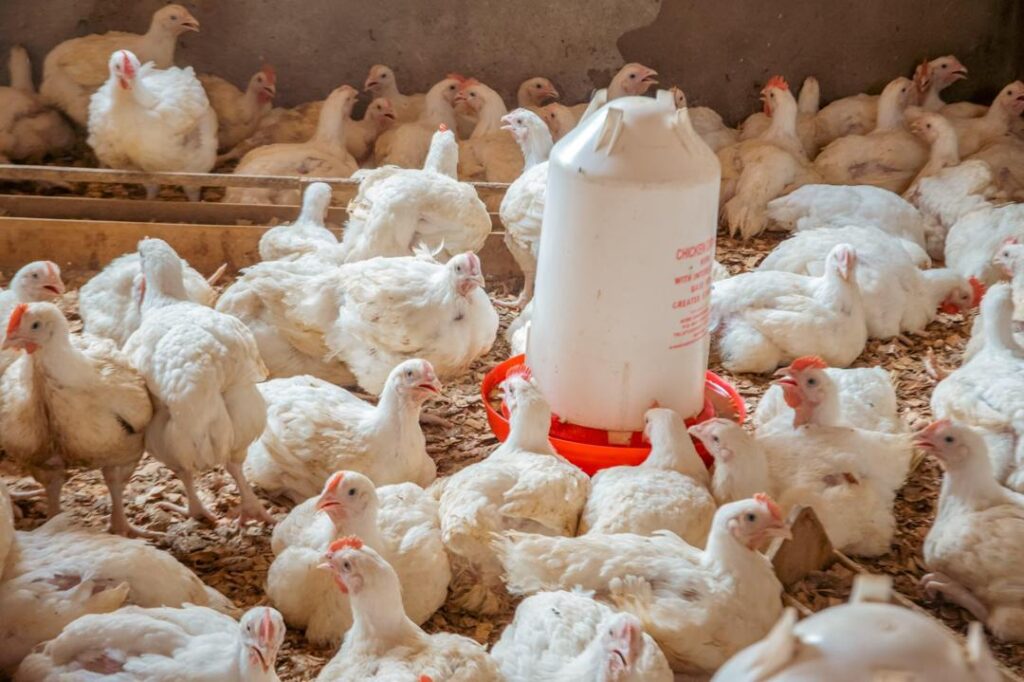
The next phase, however, requires more than ambition. It requires infrastructure, machinery and access to appropriately structured capital.
Financing the next stage of growth
Anguyo had already built a relationship with dfcu Bank before the award, maintaining a farm account through which she deposited her business income and received grants.
While she had not previously accessed a credit facility, the scale of her new investment has prompted her to explore agricultural financing with the bank’s Arua branch.
One of her immediate priorities is acquiring silos to improve how she manages feed and other aspects of the expanding poultry operation. She also plans to acquire additional machinery from China.
The investment illustrates the financing needs that emerge as farmers transition from production to commercial scale.
For Anguyo, the experience has also changed her perspective on borrowing.
“I now believe that borrowing at a good interest rate, investing wisely, and allowing the business to repay the loan is worthy,” she says.
Her planned machinery alone is expected to cost about US$68,000, rising to approximately US$75,000 including shipping to Arua. When construction and power infrastructure are included, the overall investment approaches UGX900 million.
Rather than viewing financing simply as a source of money, Anguyo sees it as a tool that must be matched to a clear business plan and productive investment.
That approach reflects an important reality for Uganda’s agricultural sector: as farmers become more commercially oriented, their financing requirements also evolve.
Learning to farm differently
Anguyo’s vision has been further shaped by exposure to agricultural practices in the Netherlands through the Best Farmers programme.
She travelled to the Netherlands expecting to learn what had enabled the country to become one of the world’s leading agricultural economies.
What she encountered went beyond technology.
One of her strongest lessons was the importance of building agricultural enterprises that can survive across generations.
Many of the farms and businesses she visited had been operating for 50 or even 100 years. The experience prompted her to think about her own enterprise not simply as a farm, but as an asset that could eventually become a source of generational wealth.
She now wants her children to understand the vision behind the business so they can carry it forward in the future.
The visit also reinforced her belief in technology.
Automated feeding, drinking and egg collection systems were among the innovations that stood out to her. She says automation can improve efficiency while also supporting better biosecurity.
On returning to Uganda, she began upgrading her own operation and has since procured automated cages, drinkers and feeders.
The relationship built during the Netherlands visit is also continuing. Two Dutch farmers are expected to visit her farm later this month to train her team, while Anguyo plans to invite other poultry farmers in the area to participate in the knowledge exchange.
More than a poultry business
Anguyo’s ambitions extend beyond her own farm.
In 2021, she founded SLAY Farmers, an initiative that has reached more than 250 young people in Arua, encouraging them to view agriculture as a viable business and a pathway to employment and wealth creation.
For her, this is particularly important in a region with significant potential for cross-border trade.
Arua’s proximity to South Sudan and the Democratic Republic of Congo provides farmers with access to regional markets, while Uganda’s broader food demand creates opportunities for businesses that can produce consistently and competitively.
“We have the capacity to produce food, create employment, and reduce dependency,” she says.
Her experience has also shaped her message to other women in agriculture.
She believes financial literacy and farmer training are critical in helping farmers become bankable and make responsible borrowing decisions.
Her advice to women who are hesitant about approaching financial institutions is simple: don’t be afraid of borrowing when the money is going into a productive investment.
The key, she says, is understanding the cost of financing, having a clear purpose for the funds and ensuring the business is capable of generating the returns required to repay the facility.
Building for the market
For Anguyo, the opportunity ahead is ultimately about markets.
Uganda has a large domestic food market, but she believes greater attention should be given to cross-border trade and the opportunity to supply neighbouring countries.
Her own journey—from award-winning farmer to an entrepreneur planning a UGX900 million poultry investment—illustrates what can happen when ambition is combined with knowledge, technology, market awareness and access to the right financial tools.
The UGX7 million award helped her take another step forward. The Netherlands experience broadened her view of what a modern farm could look like. And her ongoing conversations are opening the possibility of financing the infrastructure needed for the next phase.
For Anguyo, the goal is no longer simply to grow a farm.
It is to build an agricultural enterprise that is efficient enough to compete, resilient enough to last and valuable enough to hand over to the next generation.