


Fresh Cuts Uganda Ltd.’s request for a tax waiver has become less a question of tax collection than a test of whether one of Uganda’s best-known food companies remains financially viable.
The government is seeking Parliament’s approval to waive about Shs8.92 billion owed by the meat processor, after the Uganda Revenue Authority failed to recover the outstanding liabilities despite demand notices and other enforcement measures. The Finance Ministry says Fresh Cuts’ financial position is marked by high indebtedness, inadequate working capital and negative net worth.
That makes the proposed waiver fundamentally different from a routine tax concession.
It is effectively a potential restructuring of a distressed company using revenue that would otherwise accrue to the state.
Fresh Cuts’ financial deterioration was already visible in 2025, when the government sought parliamentary approval to waive Shs607.9 million in taxes that URA had deemed unrecoverable. The liability comprised withholding and income taxes.
Since then, the scale of the problem has become clearer.
The company had a negative net worth of about Shs22 billion in 2022, according to the Finance Ministry. It also had outstanding loans, including obligations to DFCU Bank and IBM, while officials said the business lacked sufficient working capital to meet its obligations.
A negative net worth means the company’s recorded liabilities exceeded its assets. In practical terms, Fresh Cuts was already operating with a balance sheet deficit before the latest tax dispute came before Parliament.
That raises the central question for policymakers: does removing Shs8.92 billion of tax debt restore a viable business, or simply make an insolvent balance sheet look less distressed?
The answer matters because Fresh Cuts is not an insignificant taxpayer or employer.
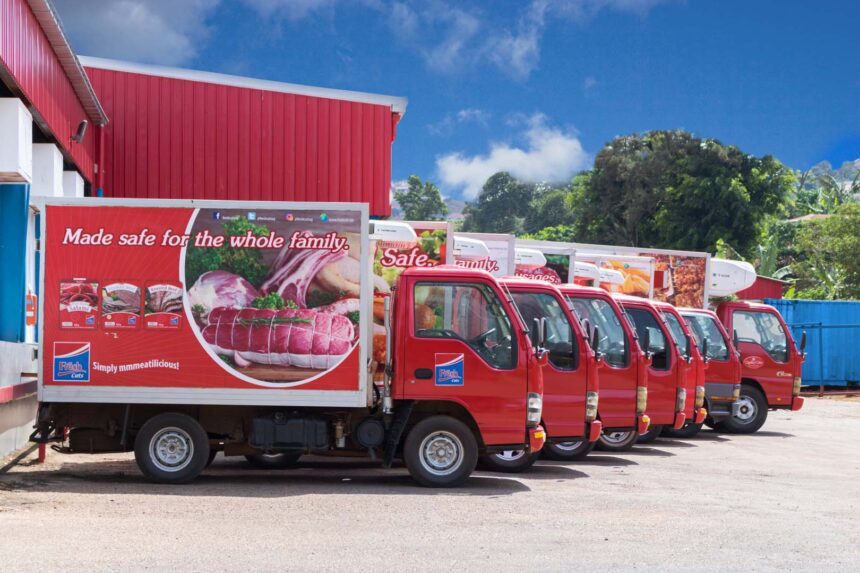
The company operates the Fresh Cuts and Quality Cuts brands and has built a significant position in Uganda’s meat-processing industry, supplying retailers, hotels, restaurants and other customers. Its failure could therefore transmit losses through farmers, employees, suppliers, lenders and other businesses connected to its supply chain.
But the economic importance of a company does not necessarily make a bailout economically rational.
The parliamentary minority report makes that distinction particularly stark. It argues that the company’s difficulties stem not simply from market conditions but from governance and decision-making failures.
Fresh Cuts told the parliamentary committee that its current owners acquired the company in 2014 without adequate due diligence and therefore did not identify historical tax liabilities. That explanation shifts part of the debate from business-cycle risk to corporate governance.
It also raises a question of accountability: why should taxpayers absorb liabilities that private owners may have failed to identify before acquiring the company?
The company’s dependence on shareholder funding adds another warning signal.
According to the parliamentary report, shareholders provided about Shs22.04 billion in 2020 and a further Shs20.81 billion in 2021. Yet Fresh Cuts continued to face tax and working-capital problems.
If tens of billions of shillings were injected into the business while its tax obligations remained unresolved, policymakers need to understand where the money went and whether those injections generated a sustainable return.
Fresh Cuts reportedly told the committee that shareholders had subsequently written off the loans, but the minority report says no evidence was provided to substantiate that claim.
That leaves the company facing a more fundamental problem than taxation: its business model and capital structure require scrutiny.
The pressure is also no longer confined to government.
In a separate case, the High Court’s Commercial Division rejected Fresh Cuts’ attempt to stop recovery of Shs71.2 million owed to agricultural supplier Padma Nikhil Rohan Africa Ltd. The debt arose after 15 post-dated cheques issued by Fresh Cuts were dishonoured for insufficient funds. The court’s decision opened the way for the creditor to pursue execution against the company’s bank accounts or other assets.
For a company that says it lacks working capital, that is significant.
A relatively small supplier claim can become a liquidity event when creditors begin competing for access to the same limited pool of cash.
Fresh Cuts also told Parliament it had about Shs2 billion in bank loans and more than Shs1.5 billion in unpaid salaries, according to the minority report. Those obligations suggest that the tax arrears are only one part of a broader creditor problem.
The question for Uganda’s Treasury is therefore not whether Fresh Cuts deserves relief. It is whether the relief creates economic value greater than the tax revenue being surrendered.
That requires more than a waiver.
It requires current audited accounts, a credible assessment of the company’s assets and liabilities, clarity on shareholder loans, a restructuring plan and evidence that the underlying business can generate enough cash to operate without repeated government intervention.
The absence of current audited financial statements is particularly troubling. Parliament was reportedly not given sufficiently recent accounts to establish whether Fresh Cuts’ negative net worth had improved or deteriorated since 2022.
That information gap makes the proposed waiver harder to evaluate on commercial grounds.
Uganda is also confronting a broader fiscal problem. Parliament has recently questioned whether tax waivers are being granted under sufficiently clear criteria and whether the promised economic benefits are subsequently measured. Legislators have called for greater transparency and post-waiver assessments.
That debate gives Fresh Cuts significance beyond the meat industry.
If the company is viable but temporarily illiquid, a structured rescue could preserve jobs, suppliers and productive capacity while giving government a better chance of recovering future taxes.
If the company is structurally insolvent, however, a waiver could amount to taxpayers absorbing losses that properly belong to shareholders and creditors.
That is the line Parliament needs to establish.
Fresh Cuts may still be worth saving. But the evidence presented so far suggests that its biggest problem is not an Shs8.92 billion tax bill.
It is a balance sheet that has been under pressure for years.
For investors and creditors, the real number to watch is therefore not the amount Parliament eventually waives. It is whether Fresh Cuts can generate positive cash flow after the waiver.
If it cannot, Uganda may simply be moving debt from one column of the balance sheet to another.
And that would not be a rescue. It would be a delay.