


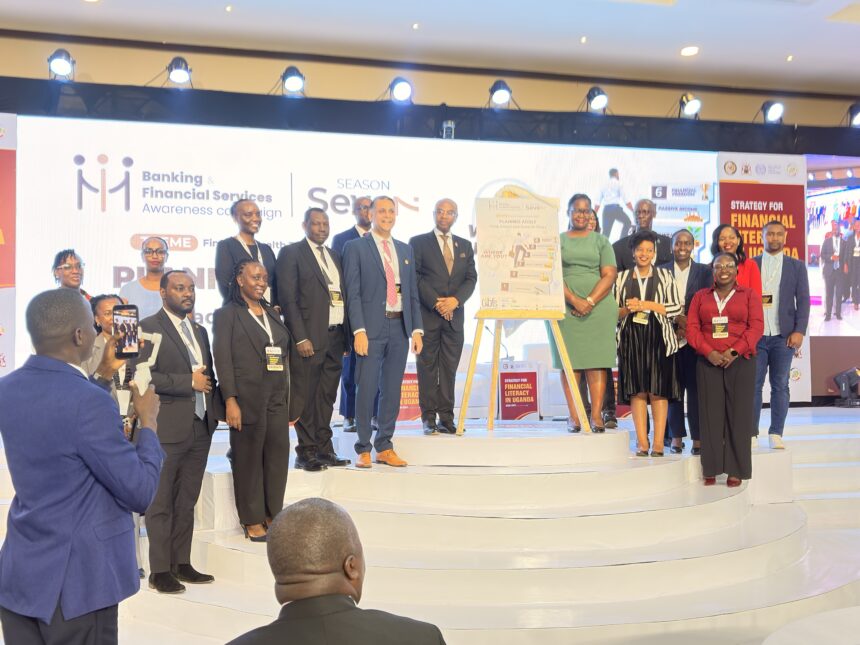
KCB Bank Uganda has pledged to deepen its financial education initiatives as Uganda rolls out a five-year national strategy aimed at improving money management, strengthening household financial resilience and supporting enterprise growth.
The commitment comes as the Bank of Uganda launches the Third National Strategy for Financial Literacy (2026–2031), which seeks to equip Ugandans with the knowledge and confidence to make informed financial decisions amid growing access to banking and digital financial services.
The strategy, which follows the conclusion of the 2019–2024 framework, places emphasis on responsible borrowing, savings, investment, insurance, retirement planning, digital financial literacy and consumer protection.
Speaking at the launch in Kampala, Sandra Nakabiito, representing the Minister of Finance, Planning and Economic Development, said access to financial services alone was insufficient without the ability to use them effectively.
“Money is only as powerful as the person who holds it. What separates two individuals earning the same income is not luck or access, but knowledge, skills and confidence in handling money. That is financial literacy,” she said.
The strategy targets groups considered particularly vulnerable to financial exclusion, including young people, women, informal workers, small businesses, farmers and rural communities.
For financial institutions, the framework presents an opportunity to move beyond expanding access to financial products towards improving how customers understand and use them.
Miranda Bageine Musoke, KCB Bank Uganda’s Head of Retail Banking, said the bank was seeking to strengthen its existing financial education programmes while placing greater emphasis on measurable changes in customer behaviour.
“At KCB Bank Uganda, we recognise that financial literacy goes beyond providing customers with products and services. It is about empowering individuals, households and businesses to make informed decisions,” she said.
She added that the bank would consolidate its initiatives, measure behavioural changes in savings and credit management, and strengthen partnerships to extend financial education to more Ugandans.
KCB’s interventions include its Female-Led and Made Enterprises (FLME) proposition, which supports women entrepreneurs with business knowledge and financial solutions, as well as SME business forums and Power Talk sessions designed to improve entrepreneurs’ financial and business management skills.
Through the KCB Foundation’s Twekozese programme, the bank has also reached more than 2,500 young people with technical, financial and business skills.
Its digital financial literacy efforts include customer education on Mobi iBank and KCB Pay, alongside partnerships with MTN and Airtel to extend access to savings solutions through MoPesa and Airtel Super Saver.
The success of the new national strategy, however, will depend on whether financial education translates into lasting changes in how households and businesses save, borrow, invest and manage financial risks.
As digital financial services expand, improving consumer awareness and responsible financial behaviour will remain critical to ensuring that wider financial inclusion delivers meaningful economic benefits.