



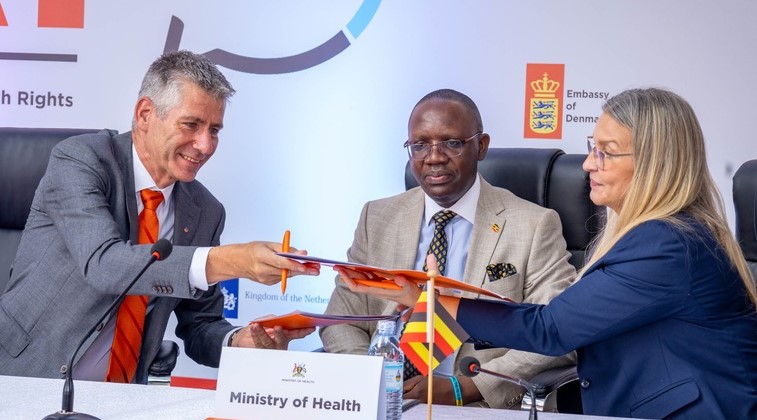
Uganda has secured a fresh US$16 million (about Shs58 billion) commitment from the Kingdom of the Netherlands to expand the SAY Plus + programme, a major initiative aimed at improving adolescent sexual and reproductive health, reducing teenage pregnancies and strengthening youth-friendly health services.
The funding, announced at a signing ceremony attended by government officials, diplomats and development partners, will support integrated health services for young people while reinforcing Uganda’s ambition to harness its rapidly growing youthful population as a driver of economic transformation.
UNFPA Uganda Country Representative Kristine Blokhus described the investment as a strategic intervention to help Uganda unlock its demographic dividend, noting that 73% of the country’s population is below the age of 30.
“Uganda is experiencing a unique demographic window of opportunity,” Blokhus said, warning that the opportunity can only be realised if young people are healthy, educated and able to make informed decisions about their futures.
She noted that nearly 24% of Ugandan teenage girls become pregnant each year, translating into about 1,000 pregnancies every day, a trend that forces many girls out of school and limits their economic potential.
Blokhus said SAY Plus + will strengthen youth-friendly sexual and reproductive health services, HIV care and gender-based violence response through existing government systems rather than creating parallel structures. The programme will also establish a Youth Advisory Committee, giving young people a direct role in shaping and monitoring services designed for them.
Netherlands Charge d’Affaires Smeding Bouwe-Jan said the investment reflects his country’s long-standing commitment to sexual and reproductive health and rights globally.
He pointed to the Netherlands’ success in maintaining one of the world’s lowest teenage pregnancy rates through comprehensive sexuality education and universal access to modern contraceptives.
However, he challenged implementing partners to move beyond workshops and activities towards measurable results.
“We want to focus on outcomes,” Bouwe-Jan said, adding that future support would increasingly depend on evidence of progress, value for money and sustainable financing through domestic resources.
He also expressed concern that teenage pregnancy rates and child marriage in Uganda have remained stubbornly high despite years of investment, calling for stronger evidence-based interventions that are culturally sensitive while protecting the rights of girls and women.
Representing the Ministry of Health, Director of Public Health Dr. Daniel Kyabayinze welcomed the grant, describing adolescent health as central to Uganda’s national development agenda.
He said the funding will initially target Busoga sub-region, specifically Namutumba, Buyende, Namayingo and Mayuge districts, where adolescent pregnancies, school dropouts and gender-related risks remain significant challenges.
Kyabayinze said government will upgrade health facilities, train health workers to provide dignified and non-judgmental care, and integrate reproductive health, HIV and gender-based violence services to ensure young people receive comprehensive support under one roof.
He pledged strict oversight to ensure every dollar delivers lasting impact, saying healthier and empowered young people are essential if Uganda is to achieve its long-term socio-economic transformation goals.