



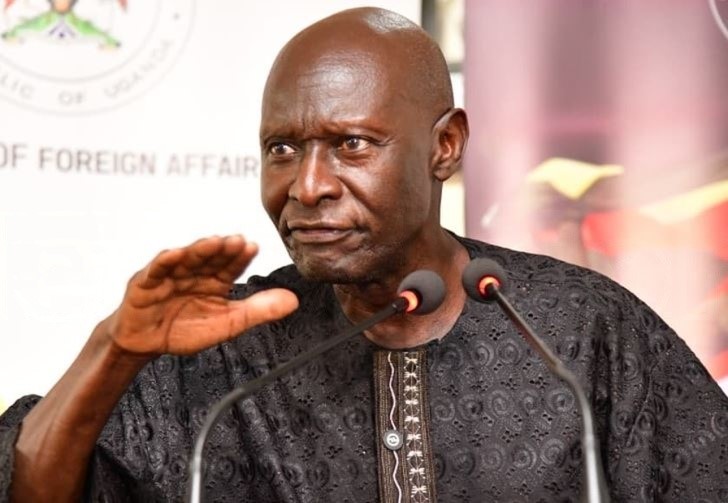
Former United Nations Under-Secretary-General and Ugandan diplomat Olara Otunnu has said the next Secretary-General of the United Nations must prioritize global peace, exercise moral authority, and foster strong engagement with member states to address the world’s growing challenges.
Speaking at the Uganda Media Centre in Kampala, Otunnu emphasized that the UN’s primary responsibility remains maintaining international peace and security, arguing that this is the benchmark by which the global body is ultimately judged.
“The most important single mandate for the United Nations remains the issue of peace and security,” Otunnu said.
“It remains the imperative of ending wars, building peace, and preserving peace. It is by that yardstick that member states and the whole world judge the United Nations.”
Otunnu, who entered the race in July as Uganda’s official nominee, is one of seven candidates seeking to succeed outgoing UN Secretary-General António Guterres when his second term ends on December 31, 2026.
The other contenders are Rebeca Grynspan of Costa Rica, Carolyn Rodrigues-Birkett of Guyana, Rafael Grossi of Argentina, Michelle Bachelet of Chile, Maria Fernanda Espinosa of Ecuador and Macky Sall. Early informal Security Council polling has placed Grynspan in the lead, although the race remains open and several rounds of voting are expected.
The 75-year-old diplomat brings more than four decades of experience in international diplomacy, having served as Uganda’s Permanent Representative to the UN, President of the UN Security Council, Under-Secretary-General and the first Special Representative for Children and Armed Conflict.
He is also credited with introducing the Security Council’s informal “straw poll” process in 1981, which is still used today to gauge support for Secretary-General candidates.
Otunnu said the UN Secretary-General does not wield financial resources but exercises influence through diplomacy and persuasion.
He noted that while the UN Secretary-General does not command financial resources to distribute to member states, the office carries significant influence through diplomacy, convening power and moral leadership.
“The UN Secretary-General doesn’t have resources to dispense to member states, but through the convening role of the Secretary-General, his or her moral authority in knocking on doors, and the power to suggest, the office can mobilize support,” he said.
According to Otunnu, the Secretary-General can play a pivotal role in persuading governments, development partners and institutions with financial capacity to make resources available for sustainable development initiatives around the world.
He further explained that the authority of the Secretary-General is derived from two key sources: the principles and values enshrined in the Charter of the United Nations and the confidence and backing extended by member states.
“The Secretary-General has at his or her disposal soft power and moral authority, which flow from the principles enshrined in the Charter of the United Nations. The second is the support he or she is able to garner from member states,” he said.
Otunnu added that the ideal UN Secretary-General should be accessible, a good listener, innovative in proposing solutions to member states and deeply humble, qualities he believes are essential for building consensus and strengthening multilateral cooperation in an increasingly divided world.