


South Sudan’s push to expand electricity access is creating new opportunities for infrastructure investors, contractors and equipment suppliers, but the scale of financing required highlights the challenges facing a country seeking to build a reliable power network.
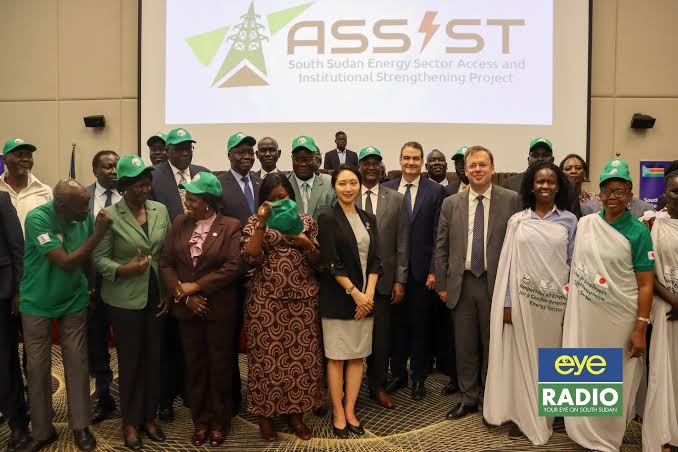
The World Bank-funded $53 million Energy Sector Access and Institutional Strengthening Project (ASSIST) includes a $16.8 million international procurement package to design, supply and install electricity distribution infrastructure in Juba. The investment targets residential, commercial and industrial consumers while strengthening the capital’s overstretched distribution network.
Beyond domestic expansion, South Sudan is positioning itself for deeper regional electricity trade through a planned 400-kilovolt transmission interconnection with Uganda, potentially reducing constraints on access to generation capacity and creating a broader market for power infrastructure services.
Implementation of the interconnection project commenced in September 2026 following approval of $121 million from the African Development Fund for the Ugandan component. The African Development Fund approved $153.66 million for the wider project in 2025, including $33.66 million for South Sudan.
Once operational, the interconnection is expected to facilitate average annual electricity exchanges of 624 gigawatt-hours between the two countries and improve access for approximately 286,710 people in South Sudan.
Meanwhile, the African Development Bank has reported supplementary financing of about UA10.61 million for Juba’s distribution rehabilitation and expansion. The project includes approximately 357 kilometres of low-voltage lines and 201 transformer stations, with up to 20,000 additional consumers expected to benefit.
These investments signal a growing infrastructure pipeline, but translating financing commitments into reliable electricity will depend on effective procurement, implementation capacity and the ability of utilities to sustain expanded networks.
For businesses, the opportunity extends beyond transmission lines to transformers, substations, engineering services and grid-management technology.
The South Sudan Oil & Power 2026 conference, scheduled for November 24–25 in Juba, will bring together investors, financiers, utilities and project developers to explore these opportunities.
Ultimately, South Sudan’s challenge is not simply attracting capital, but converting infrastructure investment into dependable electricity that supports businesses, industrial growth and household welfare.