


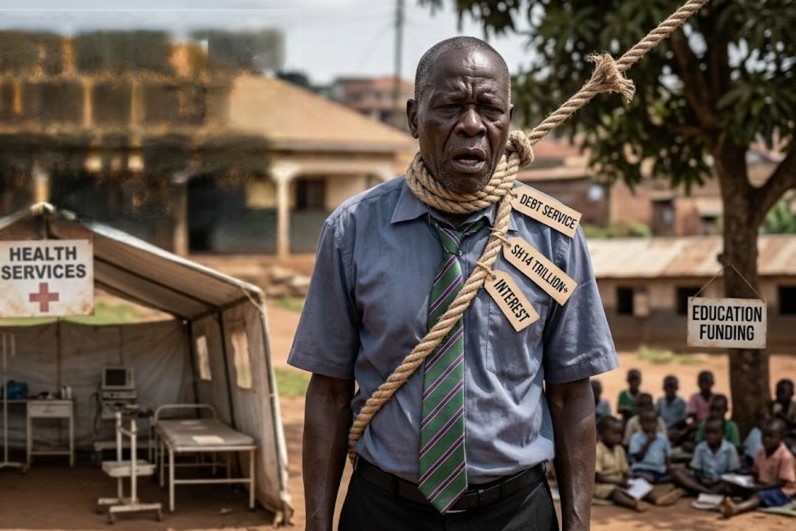
Uganda is currently spending significantly more on servicing its public debt than on funding vital social services like healthcare and education, civil society leaders warned during a engagement with Parliament’s Budget Committee.
Henry Magala, Country Programme Director for AIDS Healthcare Foundation (AHF) Uganda Cares, highlighted the alarming disparity in national expenditure. While Uganda allocates less than Sh12 trillion to health and education combined, debt servicing consumes over Sh14 trillion annually.
Speaking under the global Freedom from Foreign Debt campaign, Magala urged lawmakers to tackle the unfair terms dictated by international financial institutions.
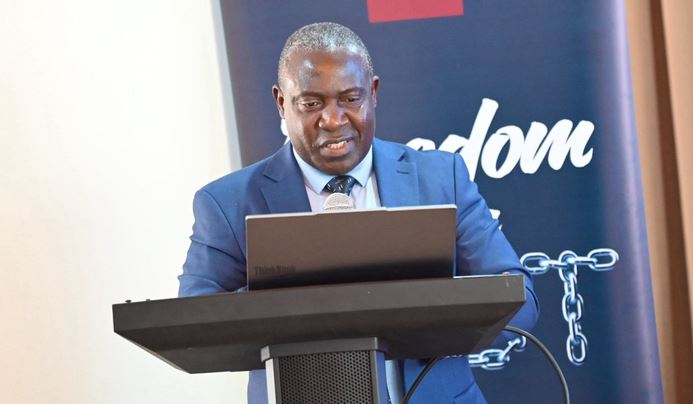
“Developing countries like Uganda face unequal financial structures, paying interest rates between 5% and 7% compared to developed nations like the U.S., which borrow at around 2%,” Magala stated. “Currently, health receives only about 6% of our national budget, far below the agreed 15% Abuja Declaration target.”
To address this inequality, CSOs recommended that the Ministry of Finance join the Borrowers’ Forum—a collective platform where developing nations can negotiate fairer borrowing terms, share best practices, and pursue debt-swap arrangements for key development projects, similar to recent successful models in Zambia and Côte d’Ivoire.
Julius Mukunda, Executive Director of the Civil Society Budget Advocacy Group (CSBAG), emphasised that close to 43% of Uganda’s national budget depends on borrowed funds.
He stressed that internal implementation delays, low absorption capacity, and hidden contractual fees severely erode the benefits of external loans.
“On a recent Sh716 billion solar irrigation loan, supplementary charges—including arrangement, agency, and insurance fees totalled Sh90 billion, equivalent to the country’s entire tourism budget. Debt obligations now consume nearly 40% of Uganda’s total annual budget.”
Responding to these concerns, Hon. Tom Aliti, Vice Chairperson of the Parliamentary Budget Committee, reassured civil society representatives that Parliament will enforce stricter scrutiny over public borrowing.
He noted that future loan approvals must demonstrate value for money, accountability, and clear alignment with national development priorities.
“The whole point here is because of our increasing debt burden. And now we are increasingly seeing that the debt burden is moving up, and we are saying we need to manage this situation. …We need to have very good loans with good interest rate, with good maturity period, and also ensure that the terms and conditions are favourable to Ugandans,” Aliti remarked.