



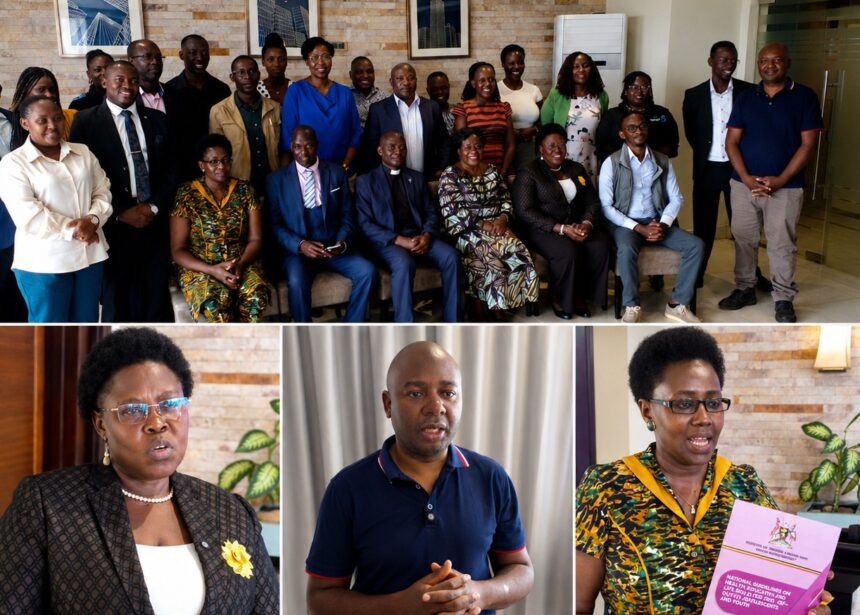
Stakeholders in Uganda’s sexual and reproductive health (SRH) sector are calling for urgent legal reforms, stronger collaboration and expanded youth-friendly services to bridge the gap between policy and reality as thousands of adolescents continue to face barriers in accessing family planning and reproductive health services.
The calls emerged during the Values Clarification and Attitudes Transformation (VCAT) Follow-on Meeting under the FP2030 initiative, which brought together participants who had previously attended FP2030 VCAT sessions alongside members of Youth Alliance.
The meeting provided a platform to reflect on progress, exchange experiences and identify practical actions to advance family planning and reproductive health programmes.
Participants agreed that while Uganda has made significant strides in developing progressive SRH policies and guidelines, implementation continues to be undermined by restrictive laws, societal attitudes and limited access to adolescent-friendly services.
Tatenda Songore, Executive Director of Youth Advocates, said adolescents across Eastern and Southern Africa continue to face a “triple threat” of gender-based violence, HIV infections and teenage pregnancies, yet many are unable to access preventive healthcare because existing laws conflict with national health guidelines.
According to Songore, adolescents below the age of 18 are frequently denied sexual and reproductive health services or receive care at the discretion of individual health workers, creating uncertainty and discouraging young people from seeking help.
He argued that evidence from countries with fewer legal barriers shows that when adolescents have access to accurate information and stigma-free health services, teenage pregnancies and other negative reproductive health outcomes decline significantly.
Songore urged Uganda to align its legal framework with existing health policies and constitutional commitments to universal healthcare by removing age-related barriers that prevent adolescents from accessing essential SRH services.
Patience Namanya highlighted Uganda’s newly launched National Guidelines on Health, Education and Life Skills for Out-of-School Adolescents and Youth, describing them as an important step towards reaching the estimated 67 percent of young people who are outside the formal education system.
“They were launched in April and they were anchored on a mother document under Ministry of Education. And that document is the National Framework on Education for Health and Life Skills, an overarching document for SRH, sexual education, health education, life skills and it is so that whoever wants to develop any materials, we will or they will anchor themselves on that overarching document which is values-based following guidance from the First Lady of Uganda,” Namanya remarked.
“We have 67% of the adolescents and youth who are out-of-school. These, because they are not in a particular well-arranged setting, they are not very easy to reach with programs, with SRH information.”
“That is why we came up with these guidelines, specifically for them. So that what they miss out in terms of SRH information, they can get it through these guidelines”,she added.
However, Namanya warned that the country still faces persistent challenges, including teenage pregnancies, HIV infections and conflicting legal provisions governing adolescents’ access to family planning services.
She also called for greater attention to the boy child, arguing that many programmes have overwhelmingly focused on girls while neglecting boys, a gap he said risks undermining gains made in gender equality and contributing to domestic violence and school dropout among young men.
Hon. Moriku Kaducu, a member of Parliament and advocate for adolescent health, acknowledged that Uganda has made progress by putting in place laws and policies on sexual and reproductive health but said significant legal gaps remain.
She noted that while the proposed regional model law offers an opportunity to harmonise national legislation with adolescents’ health needs, the country’s constitutional provisions on adulthood continue to present practical challenges.
“The challenge we face is the gap between policy and practice. While our laws recognise adulthood at 18 years, the reality is that girls are becoming pregnant as early as 10 or 13 years.
The model law guidelines provide an opportunity to harmonise our legal framework with this reality so that adolescents can access appropriate sexual and reproductive health services without being left behind,” Kaducu said.
Religious leaders also pledged support for strengthening adolescent reproductive health services while emphasising the importance of age-appropriate information.
Reverend Moses Semugoma of Mityana Diocese said faith institutions recognise the growing challenge of teenage pregnancy and early marriage and are prepared to work alongside government, health workers, cultural institutions and civil society.
He stressed that misinformation remains one of the greatest obstacles to family planning acceptance, noting that comprehensive, age-appropriate information should be delivered through coordinated community engagement rather than fragmented messaging.
Semugoma also highlighted challenges surrounding consent, particularly for adolescents without supportive parents or guardians, and expressed concern over declining youth-friendly health services as donor-funded programmes wind down.
Cultural institutions equally reaffirmed their commitment to promoting responsible reproductive health practices.
The Senior Royal Advisor to the King of Japadhola and former Second Deputy Prime Minister said cultural institutions have embraced the FP2030 initiative by translating educational materials into local languages and sensitising communities on family planning and adolescent reproductive health.
He noted that cultural leaders have embraced the FP2030 initiative by producing educational materials in local languages addressing gender-based violence, family planning and early pregnancy.
He appealed for increased government support to expand community sensitisation programmes and translate educational materials into more local languages to reach wider audiences.
Across the discussions, participants agreed that addressing Uganda’s adolescent reproductive health challenges will require harmonising laws with existing health policies, strengthening youth-friendly services and fostering collaboration among government, religious institutions, cultural leaders, civil society and young people to ensure every adolescent can access accurate information and appropriate reproductive healthcare.