



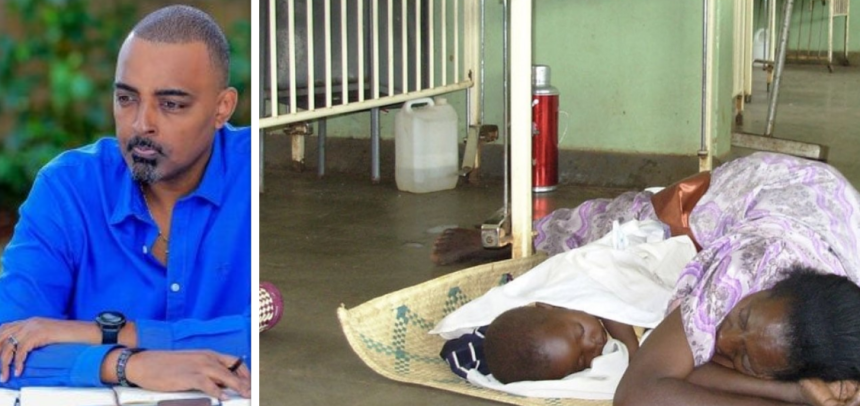
In the quiet, sterile halls of an intensive care unit, Cedric Babu—a media personality, entrepreneur, and son of a prominent former Minister and friend of a famous Ugandan army general—lies tethered to machines, his heartbeat now a digital echo sustained by science and desperation. He needs a heart transplant. He needs billions. He needs a miracle.
Outside those hospital walls, Uganda speaks, shouts, and rages—especially on X (formerly Twitter). Not everyone sends prayers. For many, Cedric’s condition has become a lightning rod for a conversation much bigger than one man’s failing heart. It is a symbol. A question. A reckoning.
How did we get here, where life—regardless of pedigree—is so perilously fragile?
A Nation’s Pulse on Life Support
In the Uganda of 2025, it is not uncommon for families to run crowdfunding campaigns to fly loved ones to India or Kenya for procedures that should be routine. The poor die quietly in overcrowded wards. The middle class sells land, cars, and future dreams. The rich fly out, silently grateful for privilege.
In this financial year,the entire health sector was allocated a paltry 3 trillion shillings,and the Ministry of Health alone-1.3 Trillion shillings, which is 4.1 percent of the national budget, and many miles away from the 15 percent threshold set by the Abuja declaration in 2001 to address Non-Communicable diseases.
But now, Cedric Babu, a man of stature and connection, lies vulnerable in a local ICU, and for many, this is a stunning equalizer.
The internet is ruthless. Some point fingers not at him, but at the regime he is associated with—one his family has, by extension or allegiance, supported. Their argument is sharp and simple: You built the house. Now you must live in it.

It’s not personal. It’s political.
And therein lies the tragedy of Uganda’s healthcare system: it is politicized, paralyzed, and profoundly unequal.
The National Health Insurance Scheme, widely expected to address financial barriers to healthcare, was passed by Parliament in 2021 but later withdrawn by the government. Officials cited the need to address certain gaps—gaps that, nearly five years later, remain unresolved. Quite a wide gap, don’t you think?
The Personal is Political
There is irony in how Cedric’s story mirrors that of thousands who suffer in silence. But what jolts the nation is that now, even the elite are not immune to the consequences of neglect. For decades, health budgets have been looted or underfunded while shiny political rallies and military parades take precedence.
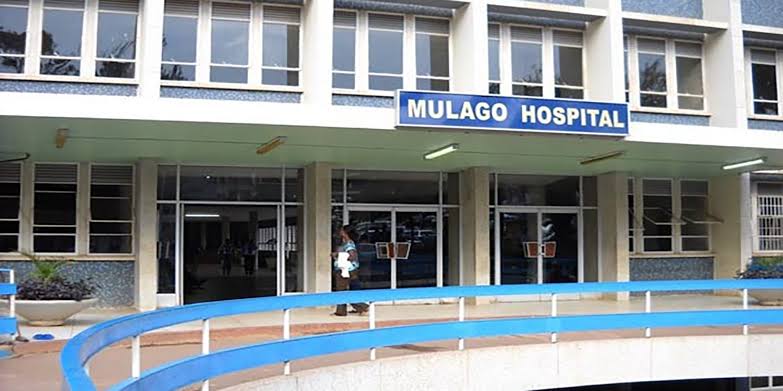
Mulago National Referral Hospital was allocated 17.7 Billion Shillings for specialized medical supplies amidst a request of at least Shs101 billion for specialized medical supplies, stating that the current budget is insufficient to meet the needs of the hospital. If the allocation is not increased, the hospital warns it will continue to require patients to purchase their own medicines.
The cost? Lives. Thousands of them.
In many hospitals, doctors do their best with the little they have—oxygen tanks that run dry, broken scanning machines, no ICU beds. Patients die from ailments that are curable with timely, quality care. This isn’t just a rural tale. This is Kampala’s truth.
Of Hearts and Hypocrisy
It shouldn’t take the critical condition of a well-known figure to make the country examine its conscience. Yet here we are, watching a son of the elite become a mirror to a collapsing system. Cedric’s illness forces a haunting question: If he, with all the connections and privilege, lies at death’s door for want of a transplant, what becomes of the boda rider, the market woman, the schoolteacher?
A Wake-Up Call in the ICU
Politics and health are inseparable. A vote cast, a budget passed—or not—determines how many ambulances run, how many drugs are stocked, how many lives are saved.
The heart of the matter is that Uganda’s health system isn’t just sick—it’s hemorrhaging. It bleeds corruption, negligence, and misplaced priorities. And now, even those who have lived above its consequences are being drawn into the undertow.
Cedric Babu may survive. He may not. But either way, his condition has opened a conversation long buried under bureaucracy and bravado.
It’s time Uganda listened to its own heartbeat. Because one day, it may be your son, your friend, your name trending—not for fame, but for one last desperate plea for help.
And perhaps then, it won’t matter which side of power you stood on.