



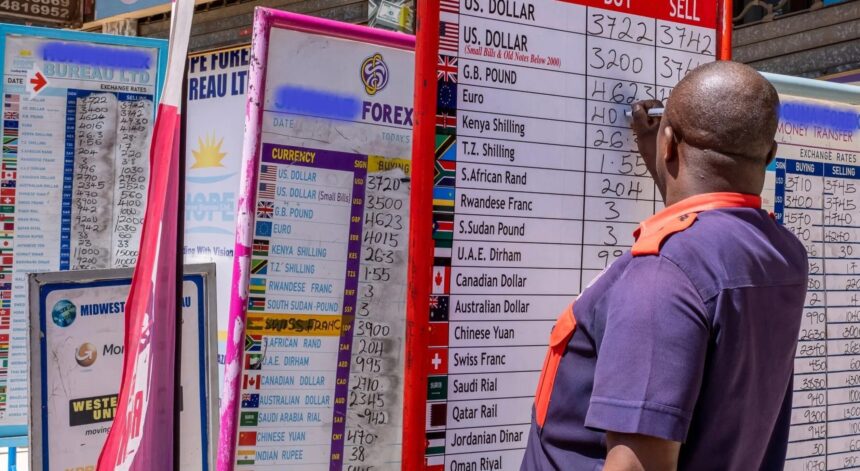
The recent announcements by the Bank of Uganda that Joppa Exchange Services Limited had voluntarily ceased foreign exchange business and that Super Gate Forex Bureau Limited had stopped conducting money remittance operations have once again drawn attention to the growing pressures facing Uganda’s foreign exchange industry.
While the central bank’s notices did not disclose the reasons behind the exits, financial sector analysts say the closures fit into a broader pattern that has seen several forex bureaus either lose licenses, fail to secure renewals, or voluntarily withdraw from the market in recent years.
Joppa Exchange Services ceased forex operations effective February 27, 2026, while Super Gate Forex Bureau ended its money remittance business on March 16, 2026.
In Super Gate’s case, the Bank of Uganda went further by inviting customers with outstanding remittance claims to submit evidence before June 12, 2026, suggesting that some transactions may have remained unresolved at the time of closure.
Industry insiders point to several possible factors.
One of the biggest challenges is the tightening regulatory environment. Since the enactment of the Foreign Exchange Act and subsequent regulations, the central bank has increasingly demanded stronger anti-money laundering controls, detailed reporting, capital adequacy requirements and compliance systems from forex operators.
Previous closures and license revocations have often been linked to breaches of operating requirements or failure to comply with regulatory obligations.
The second pressure is competition from banks and fintech firms.
Traditional forex bureaus once dominated cross-border money transfers and retail foreign exchange transactions. Today, digital platforms, mobile money services and international remittance companies have significantly altered the landscape.
The exit of WorldRemit’s Ugandan remittance entity in 2022 highlighted how operators are restructuring their presence and shifting toward alternative models.
Analysts also note that profitability in the sector has been squeezed by narrowing exchange rate margins. Increased competition means many bureaus are earning less per transaction while simultaneously facing higher compliance and technology costs.
Another possible concern is liquidity management. Forex bureaus rely heavily on maintaining adequate foreign currency reserves to meet customer demand. During periods of currency volatility or foreign exchange shortages, smaller operators can struggle to maintain sufficient cash positions, increasing operational risk.
Uganda has seen similar cases before. In past years, several forex bureaus had licenses revoked or declined renewal, while others became embroiled in disputes with the regulator over compliance requirements. In more extreme cases, customers reported losses and fraud allegations, prompting regulatory intervention.
The developments involving Joppa Exchange Services and Super Gate Forex Bureau may therefore be less about isolated business decisions and more about a sector undergoing rapid transformation.
As digital payments expand and regulation tightens, Uganda’s forex industry appears to be entering a phase where only operators with strong capital, robust compliance systems and scalable technology are likely to survive.
For customers, the closures serve as another reminder of the importance of dealing only with licensed and actively supervised foreign exchange and money remittance providers.