


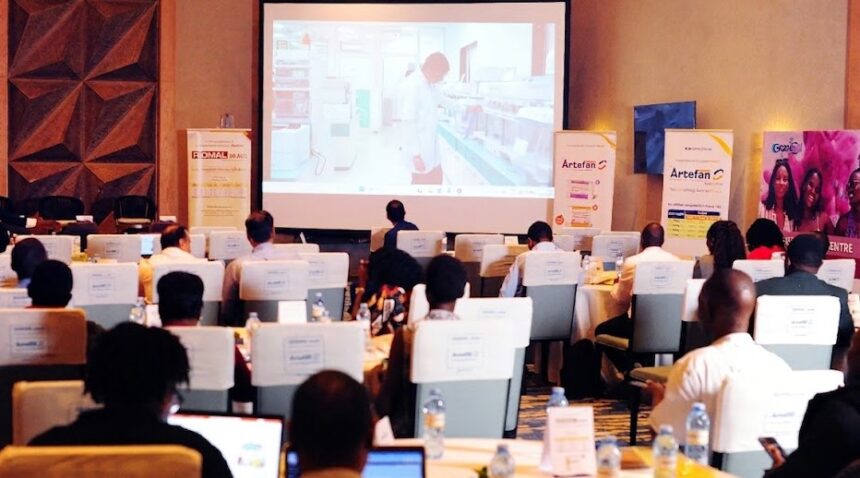
C-Care Uganda has brought together doctors, malaria researchers and Ministry of Health officials to examine whether new evidence on severe malaria is changing how the disease is treated at the bedside, as Uganda continues to grapple with one of the world’s heaviest malaria burdens.
The discussions, held in Kampala during World Mosquito Day as part of a Continuing Medical Education session organised by C-Care Uganda in partnership with Ajanta Pharma, focused on the gap that can emerge between medical research and routine clinical practice.
The session brought together Dr. Catherine Maiteki Sebuguzi, Deputy Program Manager in the Malaria Elimination Division at the Ministry of Health; Dr. Jane Achan, Principal Advisor and Senior Scientist at the Infectious Diseases Research Collaboration Uganda; and Dr. Pritch Kagera Kabata, an Intensivist at C-Care IHK.
The experts examined evidence on severe and cerebral malaria, with particular attention to the management of complications that can determine whether critically ill patients recover or deteriorate.
Among the issues discussed was the management of cerebral complications in children, including the role of interventions such as mannitol and hypertonic saline. The experts also considered the routine preventive use of phenobarbital and the management of possible bacterial co-infections in patients with severe malaria.
The discussions reflect a broader challenge in healthcare: evidence can evolve faster than clinical practice.
A treatment approach that was once widely accepted may be questioned by new research, while emerging evidence may take time to influence guidelines, institutional protocols and decisions made by individual clinicians.
That makes continuous medical education particularly important in the management of diseases such as severe malaria, where complications can develop rapidly and treatment decisions can have immediate consequences.
For C-Care Uganda, the objective extends beyond updating its own medical teams. The hospital group says it wants to create platforms where clinicians from across the healthcare system can engage directly with researchers and policymakers and examine how emerging evidence should influence practice.
Dr. Juma Fauz Kavuma, Director of Medical Services at C-Care Uganda, said the initiative is intended to help close gaps in medical knowledge by creating opportunities for clinicians outside C-Care to engage with current evidence.
The approach places greater emphasis on what happens after medical education sessions end: whether a clinician changes an assessment, questions an established intervention or adopts a more evidence-based approach when treating the next patient.
For Uganda, where malaria remains a major public-health challenge, translating research into clinical practice could have consequences well beyond professional development.
The effectiveness of medical research is ultimately measured not by how much evidence is published, but by whether that evidence changes treatment, improves clinical decisions and saves lives.
That is the challenge captured by the theme of the session: when evidence changes, practice must change.