


KAMPALA, Uganda — dfcu Bank is expanding its support for Uganda’s mining industry as the government pushes investors to move beyond raw mineral extraction and build domestic processing and manufacturing capacity.
The bank says it is combining asset financing, insurance and foreign-exchange risk-management solutions to address some of the financial and operational constraints facing businesses across the mining value chain, from artisanal and small-scale operators to larger commercial enterprises.
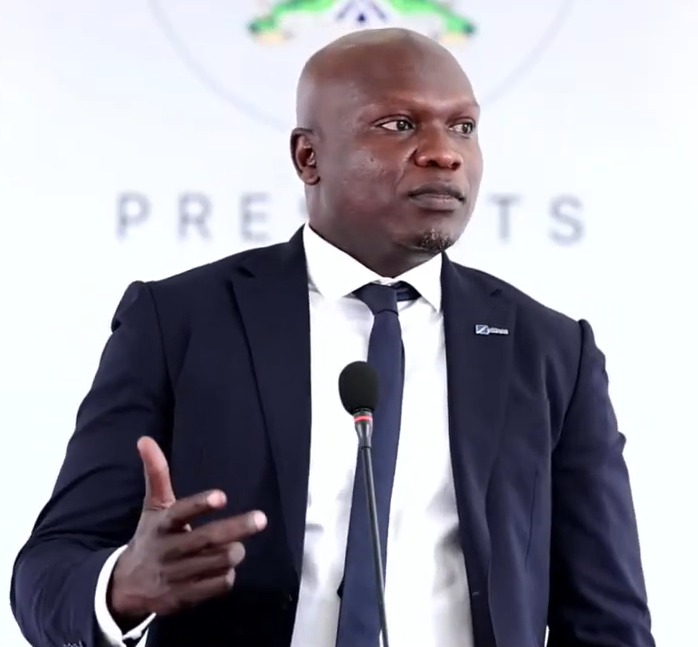
Moses Malinga, Sector Head for Infrastructure and Energy at dfcu Bank, said the bank’s approach has been shaped by direct engagement with miners and an assessment of the challenges confronting operators on the ground.
“We have actually been to the field. We have gone and met with some of these artisanal miners. We know their concerns,” Malinga said ahead of the 15th Mineral Wealth Conference at the Uganda Media Centre.
Malinga said access to capital is only one of the constraints facing miners, with equipment, insurance and exposure to currency movements also affecting the ability of businesses to expand.
dfcu has partnered with insurance firm Minet to provide medical and accident cover for artisanal miners, while offering structured financing to help operators acquire productive equipment, according to Malinga.
The bank is also assessing foreign-exchange risk-management solutions aimed at helping businesses manage the impact of movements in the Uganda shilling, he said.
The initiatives come as Uganda seeks to capture more economic value from its mineral deposits by increasing investment in exploration, extraction, processing, refining and manufacturing.
Phiona Nyamutoro, Minister of State for Energy and Mineral Development (Minerals), said the country’s mineral strategy must extend beyond identifying deposits to building industrial capacity around them.
“Our ambition must go beyond just knowing what lies beneath our soil. We must translate our mineral potential into productive investments, employment, industrial capacity, value addition, and sustainable national wealth,” Nyamutoro said.
She said investment in technology, skills, infrastructure, finance and geological knowledge would be necessary to develop the sector, alongside predictable regulatory frameworks.
Uganda has identified more than 58 mineral categories, including gold, iron ore, rare earth elements, cobalt and lithium.
For investors, however, the scale of mineral potential will need to be matched by an environment capable of attracting long-term capital.
Aggrey Ashaba, chairperson of the Uganda Chamber of Energy and Minerals, said predictable regulation and access to finance would be important if local companies are to take a larger role in the development of the sector.
“Having mineral potential is not enough. We must develop that potential in a way that creates jobs, attracts investment, builds local businesses and contributes meaningfully to Uganda’s socio-economic transformation,” Ashaba said.
He said specialised financing and risk-management tools could help businesses acquire modern machinery, increase production and move further into processing, refining and manufacturing.
The push comes as Uganda positions mining as part of its broader industrialisation strategy, with policymakers seeking to retain more value domestically rather than exporting minerals in less-processed forms.
The 15th Annual Mineral Wealth Conference and Expo 2026 will take place on September 29–30 at Speke Resort Munyonyo under the theme “Beneath the Surface: Africa’s Next Mining Powerhouse.”
The conference is expected to bring together government officials, mining companies, financial institutions, investors, technology providers and other industry stakeholders to discuss investment, value addition and the development of Uganda’s mineral sector.