


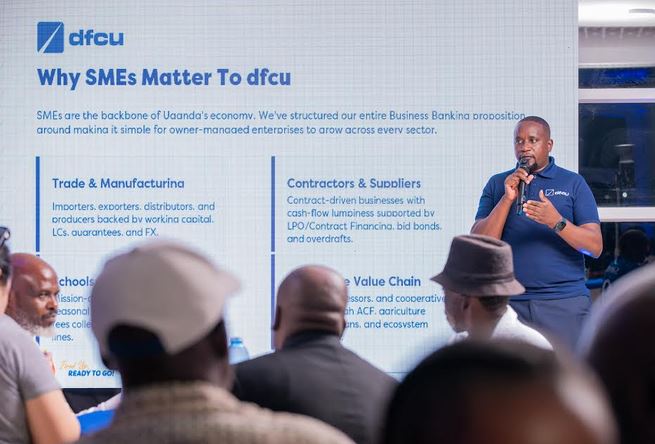
An interview with William Kayongo, Head of Enterprise Banking, dfcu Bank
For millions of Ugandans, making routine payments for electricity, water, television subscriptions and statutory obligations often comes with an additional cost: time, transport and the inconvenience of travelling to banking halls or designated payment centres. For small businesses, delays in meeting financial obligations can also mean penalties, disrupted operations and unnecessary administrative costs.
As financial institutions increasingly compete on accessibility and customer experience, agent banking is emerging as an important channel for bringing financial services closer to communities.
Through its Wenja Amaja campaign, dfcu Bank is seeking to expand access to everyday banking services by leveraging its network of agents, merchants, branches, customer activations and digital channels.
In this interview, William Kayongo, Head of Enterprise Banking at dfcu Bank, explains how the campaign is transforming access to utility and statutory payments, the benefits for small businesses and entrepreneurs, the safeguards protecting customers and the commercial opportunities available to agents and merchants.
Q: What is Wenja Amaja, and what is dfcu Bank seeking to achieve through the campaign?
WILLIAM: Wenja Amaja is a dfcu initiative designed to make banking more accessible, convenient and rewarding. We recognise that customers should not have to travel long distances or spend unnecessary time accessing services they need regularly.
We are therefore taking banking closer to communities through our agents, merchants, branches, activations and alternative channels.
We also reward our agents and merchants for serving customers, creating an ecosystem in which everyone benefits. Ultimately, Wenja Amaja is about making banking part of everyday life: closer, easier and more rewarding.
Q: What does the name Wenja Amaja represent, and how does it connect with the campaign?
WILLIAM: It is a call to identify and grow opportunities for our agents, merchants and customers through convenient banking. It encourages customers, agents and businesses to participate actively in the banking ecosystem and grow together with dfcu.
Q: Why has convenience become such an important consideration in banking, particularly when it comes to everyday payments?
WILLIAM: Customers increasingly want financial services that fit into their daily routines. Modern banking is not simply about having a bank account; it is also about accessibility, efficiency and saving time.
Many customers still face familiar challenges, including long queues, transport expenses and the inconvenience of moving between different payment points to settle their bills.
For someone who has to pay several bills, these seemingly small inconveniences can consume a significant amount of time and money. There is also the risk that delayed payments could result in service interruptions. We believe banking should eliminate these barriers rather than create additional ones.
Q: Which everyday payments can customers now access through dfcu’s agent banking network?
WILLIAM: Customers can make payments for UEDCL electricity, NWSC water bills, DStv, GOtv and Jubilee Insurance through dfcu agents.
These are essential services that households and businesses pay for regularly. By making them available through our agent network, customers can settle their obligations within their neighbourhoods without necessarily travelling to a banking hall.
The benefits include reduced transport costs, less time spent in queues and easier access to essential payment services.
Q: Does this mean customers who live or operate businesses far from a dfcu branch can still access these services?
WILLIAM: Absolutely. That is one of the central objectives of Wenja Amaja. We are expanding access through our growing network of agents, merchants and alternative banking channels.
The absence of a nearby branch should not prevent someone from accessing essential banking services. We want customers to transact conveniently within the communities where they live and work.
Q: Beyond household utility bills, can customers also use dfcu agents to meet statutory obligations?
WILLIAM: Yes. Customers can use dfcu agents to make statutory payments, including NSSF contributions and other supported statutory settlements.
This is particularly important because such payments are not optional for businesses and employers that have compliance obligations. Making the process more accessible helps customers meet these obligations more conveniently.
Q: What is the business case for agent banking, particularly for small and medium-sized enterprises?
WILLIAM: For SMEs, convenience is directly connected to productivity and business continuity.
Business owners have to manage several obligations, including utility bills, employee contributions and other statutory payments. When these transactions are difficult to complete, they consume time that could otherwise be invested in running and growing the business.
Making payments easier and faster helps business owners meet their obligations on time, reduce the risk of penalties and avoid disruptions associated with delayed payments.
It also improves administrative efficiency. Business owners should be spending their time serving customers, managing operations and identifying growth opportunities, rather than travelling between payment centres or spending hours in queues.
Q: For customers who may not be familiar with agent banking, what exactly is a dfcu agent, and what services can they access?
WILLIAM: A dfcu agent is an approved business or individual authorised to provide selected banking services on behalf of the bank after meeting our onboarding and compliance requirements.
Customers can access a range of services, including utility and statutory payments, deposits and other everyday banking transactions supported through the agent network. They can also receive convenient customer support within their communities.
Q: As agent banking expands, customer protection becomes increasingly important. How can customers identify an authorised dfcu agent?
WILLIAM: Customers should look out for the official dfcu Agent Banking signage at agent locations.
They can also verify an agent or seek guidance through our official website, www.dfcugroup.com, or contact our toll-free lines on 0800 222000 or 0800 777000.
We encourage customers to transact only through authorised dfcu agents and to follow the appropriate transaction procedures.
Q: There are still concerns among some customers about the safety of their money when transacting through agents. What assurances does dfcu provide?
WILLIAM: Customer security is a priority for us. dfcu Bank is regulated by the Bank of Uganda, and eligible customer deposits are protected by the Deposit Protection Fund of Uganda up to the applicable limit of UGX10 million, subject to the Fund’s terms and conditions.
We also work with verified agents, use secure transaction channels and provide dedicated customer support through our helplines.
We encourage customers to always confirm their transactions and retain their transaction receipts or messages for reference.
Q: Wenja Amaja also presents an opportunity for agents and merchants. What is in it for businesses that join the network?
WILLIAM: The campaign is designed to create value across the banking ecosystem.
Customers benefit from convenient access to services closer to them. Agents can attract more customers, increase business activity and earn additional income through the services they provide. Merchants also benefit from additional customer traffic and convenient payment solutions.
For individuals and businesses interested in becoming dfcu agents, the opportunity includes an additional income stream, increased customer footfall, the ability to serve their communities and access to campaign rewards where applicable.
It is a model that allows businesses to grow while helping extend financial services to more people.
Q: What is the one message you would like customers, entrepreneurs and potential agents to take away from Wenja Amaja?
WILLIAM: Banking should fit into your life, not take over your day.
Whether you are paying for electricity, water, television subscriptions or NSSF contributions, you should be able to do so conveniently, securely and closer to where you live or work.
Wenja Amaja is our invitation to customers, agents and businesses to discover the opportunities in everyday banking and grow together with dfcu.