


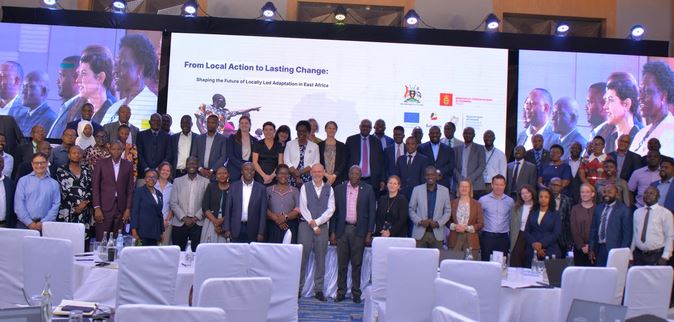
East African countries are seeking stronger mechanisms to channel climate finance directly to local governments and communities, as Uganda, Kenya and Tanzania share experiences on locally led adaptation to climate change.
At a regional workshop held under the theme “Local Action to Lasting Change: Shaping the Future of Locally Led Adaptation in East Africa,” officials and development partners called for climate funding to become more accessible, predictable and responsive to communities facing climate-related risks.
Justine Audrain, UNCDF Country Representative and Regional Programme Lead for LoCAL+, said the effectiveness of climate finance depends not only on the amount available but also on its quality and ability to reach communities.
She said the United Nations Capital Development Fund’s Local Climate Adaptive Living Facility (LoCAL) helps channel additional capital to local governments, enabling them to finance adaptation priorities while strengthening systems for sustainable investment.
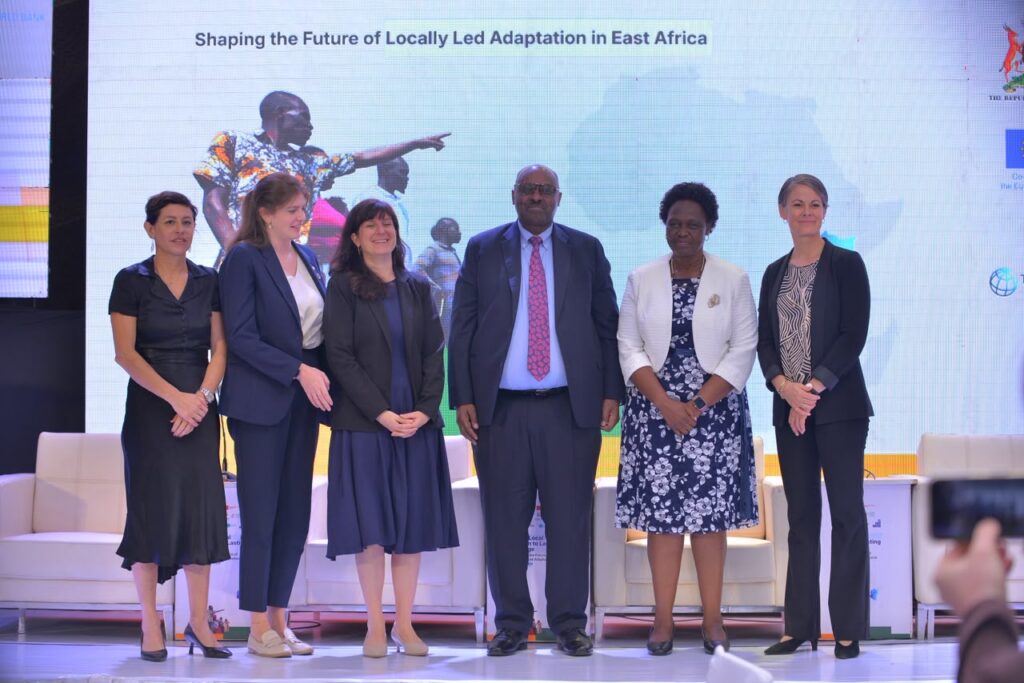
Audrain said lessons from initiatives including LoCAL, FLLoCA and LIFERAR demonstrate the potential of integrating climate adaptation financing into local government planning and budgeting.
Uganda’s Minister of State for Environment, Beatrice Anywar, said climate strategies must move beyond decisions made far from affected communities and give local people greater control over funding, priorities and implementation.
She cited Uganda’s Fourth National Development Plan and preparations for its third Nationally Determined Contribution (NDC) as opportunities to strengthen locally led adaptation.
Uganda is implementing locally led adaptation initiatives in 12 districts through the Least Developed Countries Initiative for Effective Adaptation and Resilience, alongside other mechanisms designed to expand local access to climate finance.
Anywar also highlighted the launch of Uganda’s Locally Led Adaptation Community of Practice in March 2026, coordinated through the Ministry of Water and Environment.
The workshop aims to strengthen regional cooperation, share practical lessons and identify approaches that can be replicated across East Africa.
Audrain said future adaptation efforts must also engage the private sector, which can support resilience, job creation and sustainable livelihoods.
The discussions come as communities confront rising temperatures, unpredictable rainfall and mounting pressure on agricultural production, reinforcing the need to turn climate commitments into investments with measurable local impact.