



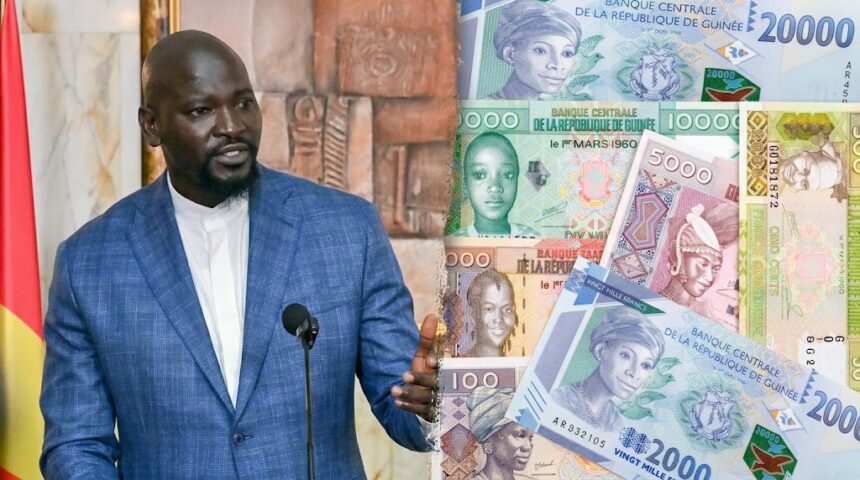
Guinea has become the first member state of the Economic Community of West African States to officially decline joining the proposed Eco currency, opting instead to retain its national currency, the Guinean franc.
The decision creates a significant wave across West Africa as the bloc prepares for the long-awaited launch of the unified currency.
Scheduled for release in July 2027, the Eco was conceived to deepen integration and boost intra-regional trade across West Africa.
However, the monetary union will not feature an immediate, bloc-wide rollout. Implementation is designed as a phased approach, admitting only those countries that strictly meet macroeconomic convergence benchmarks, such as disciplined fiscal targets, low inflation, and public debt limits.
While several nations work toward qualification, Guinea has chosen to step away from the initiative entirely.
c’s reluctance stems primarily from a desire to safeguard its monetary autonomy.
Surrendering sovereign control over its monetary policy would leave the nation without a key tool to manage domestic economic policy or buffer against external financial shocks, as independent exchange rate management remains crucial for Conakry to stabilise its internal markets.
Furthermore, trade geography played a decisive role in the decision.
Unlike many of its neighbours, Guinea’s primary export routes lie outside West Africa. A substantial portion of its trade, particularly in natural resources like bauxite, gold, and iron ore, is directed toward Asian markets.
Pegging its financial system to a regional currency tied to West African trade dynamics offers limited benefits for a country whose primary economic ties span continents.
By preserving the Guinean franc, Conakry priorities national flexibility and international trade reality over regional monetary alignment.