


By Brian Mugenyi
On June 28, 2011, pupils at Runyanya Primary School in Kiryandongo District were inside their classrooms, waiting for a downpour to pass when lightning struck the school.
Eighteen children died instantly and another 36 were injured.
For the families, it was a devastating loss. For the school and the surrounding community, the tragedy would leave a lasting scar. But thousands of kilometres away, the incident would also become part of a much larger story — the continuing work of an American emergency physician who had spent decades studying lightning injuries and advocating for measures to prevent deaths.
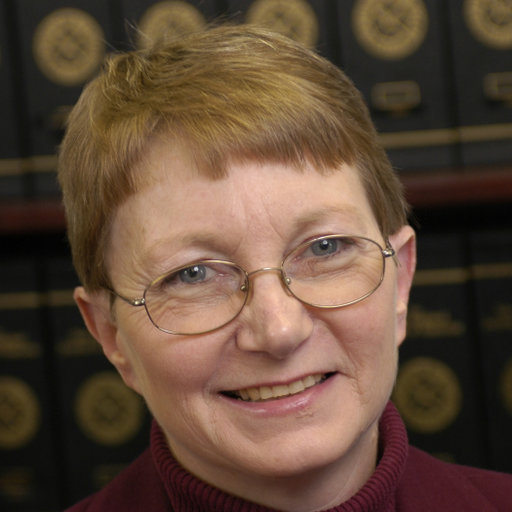
Her name is Dr Mary Ann Cooper, an internationally recognised expert in lightning injury and safety whose career has spanned more than five decades.
Cooper’s journey has taken her from emergency medicine in the United States into scientific research, public education and community-based lightning protection programmes across Africa. Uganda, in particular, would become an important part of that work.
Her interest in lightning grew from medicine. After earning a bachelor’s degree in biochemistry from Michigan State University, Cooper obtained her medical degree from the university’s College of Human Medicine. She later completed an internship at William Beaumont Hospital and specialised in emergency medicine at the University of Cincinnati Medical Center.
It was through treating patients that lightning became more than a weather phenomenon to her. It became a human injury-prevention problem.
A lightning strike can kill within seconds, while survivors may suffer severe and sometimes long-term injuries. That reality led Cooper to a question that would shape much of her professional life: if lightning injuries could be better understood, could more of them be prevented?
The answer ultimately took her beyond the emergency room.
Cooper went on to become Professor Emerita in the Department of Emergency Medicine at the University of Illinois at Chicago and built an extensive body of research and professional work on lightning injury and safety. Her record includes books and monographs, peer-reviewed publications, chapters and hundreds of scientific presentations.
But for Cooper, research has always had a practical purpose: getting reliable information to people before lightning strikes.
How Uganda Became Central to Her Work
The Runyanya tragedy came at a pivotal moment.
According to the African Centres for Lightning Education Network (ACLENet), Cooper met Ugandan scientist Richard Tushemereirwe at a lightning meeting in Nepal in 2011, only months after the deaths at Runyanya. The two subsequently committed to working together to reduce lightning deaths and injuries across Africa.
Cooper says the information she received about the impact of lightning in Uganda immediately caught her attention.
“I was interested in Nepal and Uganda’s Richard, a trainee on lightning, talked about the dangers of it and how it has affected people, and I picked interest to work with Uganda,” she said.
That relationship contributed to the establishment of ACLENet, where Cooper now serves as co-founder and managing director. The organisation works to reduce lightning-related deaths, injuries and property damage across Africa through research, education, public awareness and the installation of lightning-protection systems.
Runyanya would provide one of the clearest demonstrations of what that approach could achieve.
Following the 2011 tragedy, enrolment at the school reportedly fell from about 600 pupils to 400 as parents became afraid to send their children back. ACLENet subsequently installed a lightning-protection system at the school.
The school’s head teacher later reported that enrolment rose to more than 800 after families regained confidence in the safety of the institution.
The experience illustrates an important aspect of Cooper’s work. Lightning protection is not simply about engineering equipment. In communities that have experienced catastrophic lightning strikes, it is also about restoring confidence and allowing schools and other public institutions to function without exposing people to unnecessary risk.
At Runyanya, a technological intervention helped transform a school associated with tragedy back into a place where parents were willing to send their children.
Fighting Lightning Myths With Science
Cooper’s work also focuses heavily on public education because misinformation surrounding lightning can increase people’s vulnerability.
Speaking virtually from the United States during a lightning-safety meeting, she emphasised that lightning is a natural phenomenon and challenged some of the myths surrounding what attracts strikes.
She noted that lightning is more likely to strike tall, isolated or pointed objects, rather than being attracted by particular colours or ordinary objects as some people believe. ACLENet has also highlighted misconceptions in Uganda, including beliefs that lightning is caused by witches or that the same location cannot be struck twice.
For Cooper, correcting such misconceptions is not merely an academic exercise. Accurate information can determine whether people make safe decisions when a storm approaches.
That focus has become increasingly important in Uganda, where lightning remains a recurring cause of deaths and injuries, particularly during severe thunderstorms.
But Cooper says the scale of the problem is difficult to establish because lightning deaths are not adequately recorded in many countries.
“For 30 years, I have been in conferences of lightning, and the pain the people go through has been shared,” she said, adding that “most of the countries don’t have record death toll for lightning.”
The absence of reliable data has consequences for policy and investment. If governments cannot accurately quantify lightning deaths and injuries, it becomes more difficult to demonstrate the scale of the problem and make the case for investment in protection systems, public education and preparedness.
ACLENet has consequently worked to document lightning-related mass-casualty incidents and develop injury-reporting resources. Its researchers have recorded several incidents in Uganda, including a 2020 lightning strike near Odramacaku that killed 10 children and injured four others.
Five Decades of Research, Prevention and Advocacy
Cooper’s authority on lightning safety rests on a career that has brought together medicine, scientific research and public advocacy.
Her professional profile lists seven books and monographs, 95 peer-reviewed publications, three editorials and more than 135 chapters and revisions. She has presented her work at hundreds of international, national and regional meetings and has consulted for major United States institutions including NASA, the National Park Service, the National Weather Service and NOAA.
In 2003, she became a Fellow of the American Meteorological Society, reportedly the first physician to receive the distinction. Her work has also been recognised by the Wilderness Medical Society and other professional organisations.
In 2026, her more than five decades of work were further recognised with a Lifetime Achievement Award from the International Conference on Lightning Protection.
Yet Cooper’s work in Uganda demonstrates why her contribution extends beyond academic recognition.
Through ACLENet, lightning-protection systems are being designed and installed at schools using internationally recognised standards, while education programmes target pupils, teachers, parents and communities.
The approach combines two essential elements: protecting people physically and equipping them with the knowledge to respond appropriately when thunderstorms develop.
For Cooper, the objective is not to make communities live in fear of lightning, but to help them understand the risks and take practical measures to reduce them.
That philosophy is perhaps best captured by what happened at Runyanya.
The lightning strike of 2011 could have remained simply another tragic statistic. Instead, the deaths of 18 children helped draw international attention to the need for stronger lightning protection and education in vulnerable communities.
The work that followed has shown that prevention is possible.
Lightning will continue to occur. Storms will continue to form and communities will continue to experience severe weather. But the consequences do not necessarily have to be fatal.
For more than 50 years, Cooper has followed lightning from the emergency room to the laboratory, from scientific conferences to classrooms and from individual injuries to community-wide prevention.
Her work in Uganda has added another dimension to that journey: showing that scientific knowledge can be translated into practical protection for some of the people most vulnerable to lightning.
At Runyanya, 18 children were lost in a matter of seconds.
The legacy of Cooper’s work is an effort to ensure that the next storm does not have to produce the same outcome.
Lightning cannot be stopped. But with better information, protection and preparedness, lightning deaths can be prevented.