


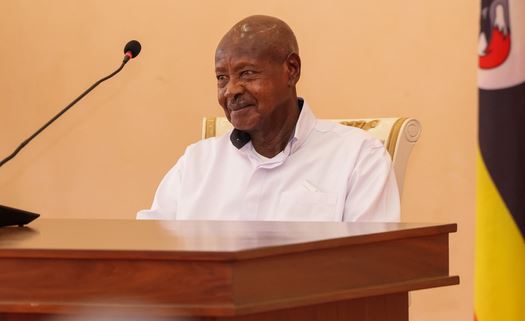
President Yoweri Museveni has rejected a Bank of Uganda proposal to use foreign exchange reserves to support the weakening shilling, arguing that currency depreciation can benefit exporters even as it raises costs for importers and consumers.
Speaking during Uganda’s 64th Independence Day celebrations on Friday, October 9, Museveni said he opposed deploying the country’s dollar reserves to counter the currency’s decline, exposing a policy divide over how authorities should respond to mounting foreign exchange pressures.
Why is the shilling weakening?
Museveni attributed the pressure to several external and domestic factors, including rising global fuel prices, reduced earnings from some exports, capital outflows and lower tourism receipts. He also cited global geopolitical tensions and changing returns on international investments as factors affecting dollar availability.
The shilling was quoted by commercial banks at approximately Shs4,090 buying and Shs4,100 selling per dollar on October 8, reflecting mounting pressure on the currency.
Would using reserves stabilise the currency?
Museveni said spending reserves to defend the shilling would be a mistake, particularly if the intervention primarily protects importers. He argued that exporters receive more local currency when foreign earnings are converted at a weaker exchange rate.
For coffee exporters, for example, the same dollar revenue translates into more shillings when the exchange rate rises. However, the benefit depends on export volumes, international prices and the cost of imported inputs.
Why are fuel prices rising?
The president linked higher fuel costs to persistent conflict in the Gulf, which has pushed up international prices. He said Uganda had initially benefited from a supply arrangement with Vitol that temporarily cushioned the country from global price increases, but that relief could not continue indefinitely.
Higher fuel prices threaten to feed into transport, manufacturing and distribution costs, potentially adding to inflationary pressure across the economy.
What is the economic trade-off?
Museveni’s position prioritises preserving foreign exchange reserves and allowing market forces to influence the shilling. But depreciation creates competing outcomes where exporters may gain from improved local-currency earnings, while import-dependent businesses face higher costs for fuel, machinery, medicines and other goods.
The central question for policymakers is whether the export gains will outweigh the inflationary pressure and additional costs borne by households and businesses while the direction of the shilling will remain closely linked to global oil prices, export receipts, foreign capital flows and domestic demand for dollars.
The president’s rejection of intervention signals that the government is reluctant to use reserves as its first line of defence, leaving the economy exposed to continued currency volatility if external pressures persist.