



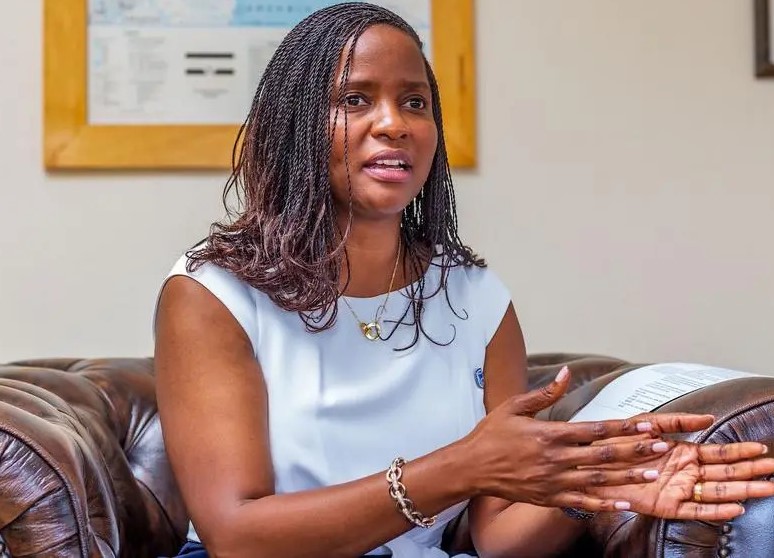
Former Stanbic Bank Uganda chief executive Anne Juuko is facing renewed scrutiny over her exit from the lender just as her name gains traction in the succession contest for the top role at the East African Development Bank.
According to multiple banking and corporate governance sources familiar with the process, Juuko is among the candidates being considered for the position of Director General at the regional development finance institution, whose lending portfolio spans infrastructure, energy, trade finance and industrial development across East Africa.
But the re-emergence of disputed Stanbic-related documents has introduced an unexpected complication into a recruitment process already shaped by regional lobbying and shareholder sensitivities.
The documents, which began circulating again within financial and legal circles in recent weeks, offer conflicting accounts of Juuko’s final months at Stanbic before her transition into a regional role within Standard Bank Group in 2024.
One document — described by individuals familiar with the matter as an internal board resolution dated December 2023 — allegedly raised concerns over governance execution, operational controls and implementation of board directives during her tenure.
Another filing, dated May 2024 and reportedly submitted to the Uganda Registration Services Bureau, characterised the transition differently, stating that Juuko completed her contractual term before assuming a broader regional mandate within the Standard Bank Group structure.
The existence of the two divergent narratives has fuelled speculation inside East Africa’s banking sector over both the authenticity of the earlier document and the timing of its resurfacing.
People familiar with the matter say the disputed December document does not appear in official URSB records tied to Stanbic’s corporate filings, raising fresh questions about whether it represented a formal board action, an internal draft, or a document circulated outside established governance channels.
The renewed focus on Juuko comes at a sensitive moment for EADB, whose next chief executive will inherit a lender increasingly central to regional infrastructure financing amid tightening fiscal conditions across East African economies.
The institution — jointly owned by member states including Uganda, Kenya, Tanzania and Rwanda — has in recent years expanded its focus on climate finance, industrialisation and private sector credit support.
That strategic importance has elevated the significance of the succession process beyond a conventional executive appointment.
Juuko remains one of the region’s most recognisable banking executives, having led Stanbic Uganda through a period of strong earnings growth, digital expansion and corporate lending activity despite post-pandemic market pressures.
Her subsequent appointment as Regional Head for East Africa Global Markets at Standard Bank was widely viewed within the sector as evidence of continued institutional backing from Africa’s largest banking group.
Former Standard Bank executive Patrick Mweheire publicly described her leadership at the time as “exceptional”, reinforcing perceptions that she remained on an upward regional trajectory.
Still, the episode underscores how unresolved boardroom disputes — whether formal, informal or politically amplified — can re-emerge during high-level regional appointments where reputational due diligence extends well beyond regulatory findings.
While sources close to the EADB process say no direct regulatory culpability has been established against Juuko in connection with the issues referenced in the disputed document, the controversy has nevertheless shifted attention toward governance optics at a critical stage of the selection process.
In East Africa’s tightly networked financial sector, perception often carries strategic weight equal to performance.