



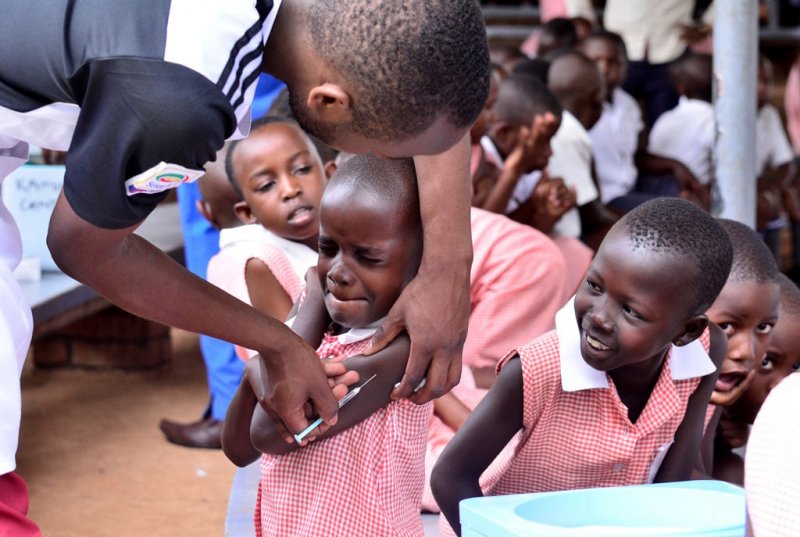
Uganda is set to undertake a five-day nationwide measles vaccination campaign targeting 7.5 million children aged between nine and 59 months as the country responds to repeated outbreaks reported across several districts.
The campaign, scheduled for October 1–5, 2026, will cover all 156 local governments, with health authorities aiming to vaccinate at least 95% of eligible children and potentially reach 105% of the target.
Dr Ritah Atugonza, Deputy Programme Manager at the Uganda National Expanded Programme on Immunisation (UNEPI), said the campaign has become necessary following the continued spread of measles across the country.
“In 2025, we had 66 districts declared as measles outbreak districts,” Atugonza said, noting that some districts have experienced repeated outbreaks despite previous vaccination efforts.
She said surveillance data shows that children below five years constitute the largest affected age group, while many of the detected measles cases involved children who had never received the vaccine.
Atugonza attributed the continued outbreaks to vaccination coverage below the recommended 95% threshold, low community awareness—particularly about the second measles dose given at around 18 months—and weaknesses in community and facility-level health education.
She also cited delayed outbreak detection, weak surveillance, inadequate supervision of outbreak responses and limited community mobilisation as persistent gaps.
The campaign will not involve door-to-door vaccination. Instead, district health teams will establish fixed vaccination posts based on areas where they can achieve the greatest reach.
Importantly, Atugonza said all children under five will be eligible, regardless of whether they have previously received a measles vaccine.
“There is no such thing as overdosing on a measles vaccine,” she said, adding that additional doses provide more robust protection.
The campaign is also intended to strengthen Uganda’s wider immunisation system by improving surveillance, community awareness and routine vaccination rather than treating the exercise solely as an emergency response.
Atugonza said Uganda successfully vaccinated 19 million children during a previous campaign in 2019, demonstrating that reaching the 7.5 million target is achievable.
The campaign will be followed by October Child Health Days throughout the rest of the month.
Atugonza urged Parliament, local governments, schools, community organisations, religious institutions, development partners and the media to support mobilisation and public education.
She said the campaign is designed as a “whole-of-government” effort, with the Ministry of Education and Sports, Ministry of Gender, Labour and Social Development and Ministry of Local Government expected to support mobilisation and identification of vulnerable children.
The call comes amid uneven immunisation coverage in several regions. Atugonza cited first-dose measles-rubella coverage of about 76% in northern Uganda and 79% in West Nile, levels she linked to continued outbreaks in parts of those regions.
She also warned of the heightened risk in Karamoja, where children have died from the combined burden of measles and malnutrition.
According to Atugonza, achieving at least 95% coverage for both measles doses would provide the level of population protection needed to prevent sustained transmission.
The proposed national launch of the campaign will be held in Wakiso, with health authorities calling on stakeholders to help ensure that “no child is missed and no community is left behind.”