



The Common Market for Eastern and Southern Africa (COMESA) Competition Commission (CCC) has imposed a $750,000 settlement on Diageo Plc, one of the world’s largest alcoholic beverage producers, after finding the UK-based company engaged in anti-competitive practices across several African markets.
The CCC’s decision follows a three-year probe launched in 2021 into Diageo’s operations alongside Heineken, Castel, and Anheuser-Busch InBev (AB InBev). The investigation scrutinized “market allocation arrangements” and “territorial restrictions” that allegedly limited trade and competition within the 21-member COMESA common market, which includes Uganda, Zimbabwe, Zambia, Kenya, Ethiopia, and Libya.
In its official statement, the CCC revealed that Diageo’s distribution agreements in Seychelles, Uganda, Eswatini, Zambia, and Zimbabwe contained restrictive clauses that violated Article 22 of the COMESA Competition Regulations. These clauses, the Commission found, included price fixing, territorial exclusivity, and resale restrictions that discouraged cross-border trade and reduced consumer choice.
According to the Commission, Diageo’s agreements in Uganda were particularly problematic. Distributors were barred from dealing in competing products, a practice that “harmed inter-brand competition.”
Additionally, the agreements included clauses restricting distributors from operating beyond their designated territories, effectively creating “absolute territorial restrictions” that reinforced national borders and limited intra-regional trade.
In Eswatini and Zambia, Diageo’s contracts confined distributors to specific domestic markets and prohibited sales to buyers who might export the goods, further constraining the movement of products within the region.
Following extensive consultations with the CCC, Diageo entered into a commitment agreement “on a non-admission liability basis,” which was endorsed by the Commission’s Committee Responsible for Initial Determinations on September 23, 2025.
Under the settlement, Diageo will pay $750,000 and implement a series of corrective measures, including:
- Terminating certain distribution agreements in Eswatini and Zambia.
- Amending contracts in Uganda to eliminate anti-competitive clauses.
- Submitting periodic compliance reports to the Commission to ensure sustained adherence to fair trade practices.
Diageo, the maker of global brands such as Johnnie Walker, Guinness, and Smirnoff, said it welcomed the resolution. “We’re pleased that this matter has been resolved and will be implementing the terms of settlement in due course,” a company spokesperson said.
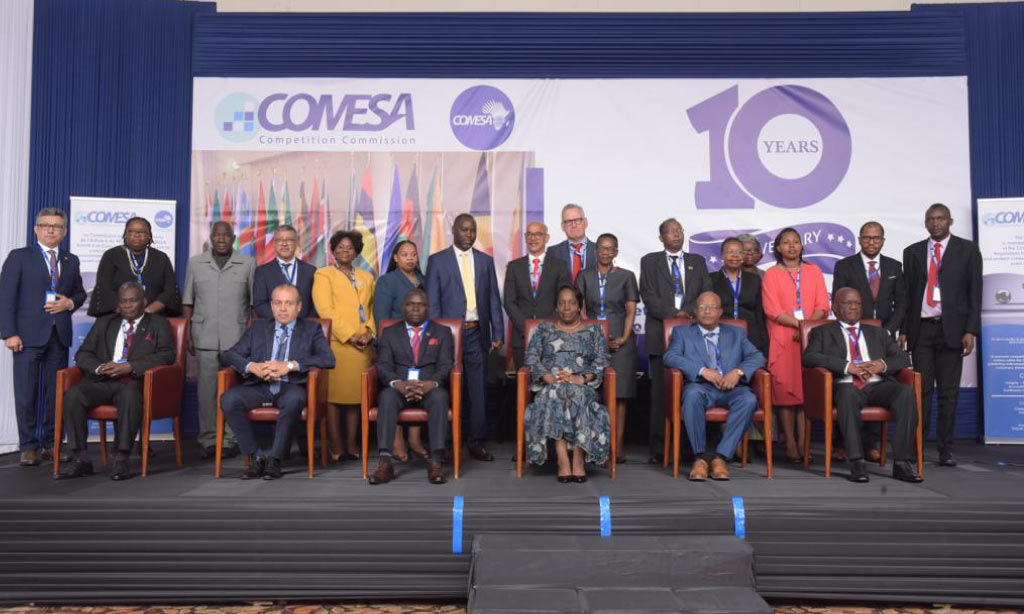
The CCC described the settlement as a significant step toward promoting a level playing field within the region’s beverage industry. “These actions reaffirm our commitment to ensuring a competitive regional market and protecting consumers in the common market,” said CCC chief executive officer Willard Mwemba during a press briefing in Nairobi.
Mwemba revealed that since its establishment, the Commission has handled over 480 mergers and acquisitions, more than 50 restrictive business practice cases, and 60 consumer protection matters, reflecting an increasingly assertive approach to market regulation in the region.
The Diageo case is part of a broader enforcement drive targeting multinational beverage companies. In March this year, the CCC concluded a similar probe into Heineken Holding N.V., which resulted in a $900,000 settlement.
The Dutch brewer was found to have prevented its distributors from purchasing competing products, a practice that similarly breached COMESA’s competition regulations.
Investigations into Castel Group and AB InBev are still ongoing, with the Commission expected to publish its findings in the coming months.
For member states such as Zimbabwe, Uganda, and Zambia, the decision signals the growing assertiveness of COMESA’s regulatory framework in tackling anti-competitive behaviour by large corporations operating within its borders. The fines and corrective actions are expected to enhance transparency, increase consumer choice, and support fair pricing across the regional market.
Analysts say the ruling could also reshape distribution dynamics in Africa’s lucrative alcoholic beverages sector, where multinational giants have long dominated through exclusive agreements and brand lock-ins.
“This is a landmark case for regional trade governance,” said one Nairobi-based trade analyst. “It sends a clear message that even the largest corporations are not beyond the reach of regional competition law.”
As COMESA strengthens its legal and institutional mechanisms, Mwemba noted that the Commission would continue to monitor corporate conduct and collaborate closely with national competition authorities to prevent market abuses.
“We have deepened cooperation with member states and stakeholders both within and beyond the region and continued to strengthen the legal and regulatory framework governing competition and consumer protection in the COMESA region,” he said.
For Diageo, whose African operations form a key pillar of its global growth strategy, the settlement marks both a reputational and regulatory challenge. However, by swiftly reaching an agreement with the CCC and committing to compliance reforms, the company appears eager to move forward and reinforce its standing in one of its fastest-growing markets.
With the enforcement momentum building, industry observers predict that more regional companies will be compelled to reassess their distribution and pricing models to align with COMESA’s competition regulations — signaling a new era of accountability and fair play in Africa’s integrated market.