



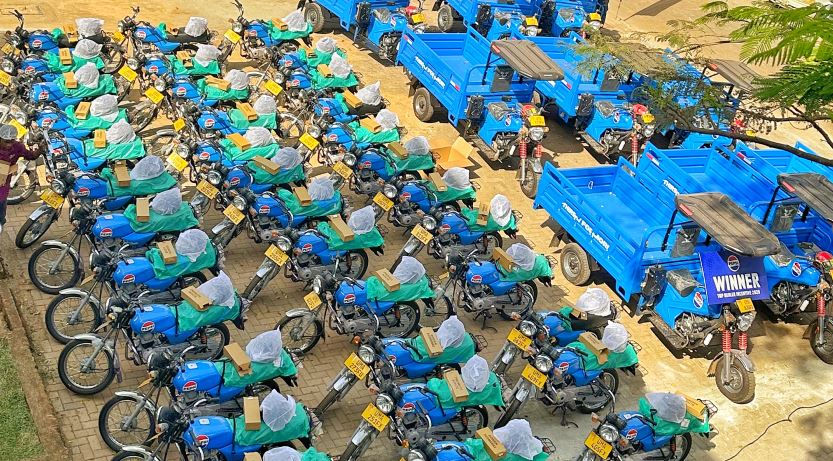
Crown Beverages, Commercial Manager Rogers Anguzu has said the company’s channel partner rewards programme is deliberately designed to drive specific performance behaviours among distributors and retailers, rather than simply boost short-term sales.
Speaking during an awards event at the company’s Nakawa offices, where top-performing channel partners were recognised for delivering the 2025 business objectives, Anguzu explained that the programme is anchored on clearly defined commitments made by dealers at the beginning of the year.
Distributors are required to set realistic sales targets, maintain consistent product availability, and demonstrate the ability to penetrate their assigned territories effectively.

“The key behaviour we want to see is commitment to agreed numbers and disciplined execution,” Anguzu said. “Our partners commit to what they believe they can achieve, and we track performance against those commitments. We also look at consistency, territory coverage and how well they serve the last consumer.”
Hilda Mbabazi, CEO,Crown Beverages Limited , noted that Pepsi clearly values its channel partners they are are always the ones interfacing with their consumers on the last mile,helping position their brands and deliver the experiences the consumers have come to expect.
” We will continue to support our channel partners to grow their businesses and create more jobs and opportunities for the youth in Uganda”.
According to Anguzu, Crown Beverages works closely with its dealers throughout the year, offering guidance and operational support to help them improve planning, stock management and route efficiency. The company views the competition as a behavioural tool that encourages distributors to think long-term about growing their businesses rather than focusing on sporadic sales spikes.
The rewards structure is equally intentional. Anguzu said experience-based incentives such as holidays have proven ineffective for most distributors in Uganda, who prefer rewards that directly support their day-to-day operations. Instead, business-enabling assets such as tuk-tuks, boda boda motorcycles and product packages have emerged as the most motivating incentives.
“These are business people. They need tools that help them work,” he said. “It’s not easy for someone to withdraw 13 million shillings from their business and buy a tuk-tuk. But when you give them that asset, they immediately put it to productive use.”
Winners were given the option to receive vehicles or take Crown Beverages products of equivalent value, a choice that reflected different operating realities across regions. Anguzu noted that many distributors in the Nile region opted for product, while those in the Central region largely preferred vehicles due to the structure of third-level distribution in urban and peri-urban areas.
He added that cash incentives alone are not always the most effective motivator, as they can be absorbed into routine expenses without transforming operations. In contrast, tangible business support creates visible impact, improves efficiency and strengthens loyalty between the company and its partners.
By aligning rewards with desired behaviours — consistent performance, deeper market penetration and improved last-mile delivery — Anguzu said Crown Beverages is building a stronger, more resilient distribution network that benefits both the company and its channel partners over the long term.
Edgar Atuhaire, Head of Sales and Distribution, Crown Beverages Limited remarked that the move today was just the start of their initiatives to excite and boost trade and there are many more to come this year involving,contract distributors,dealers,retailers,and all outlets.