



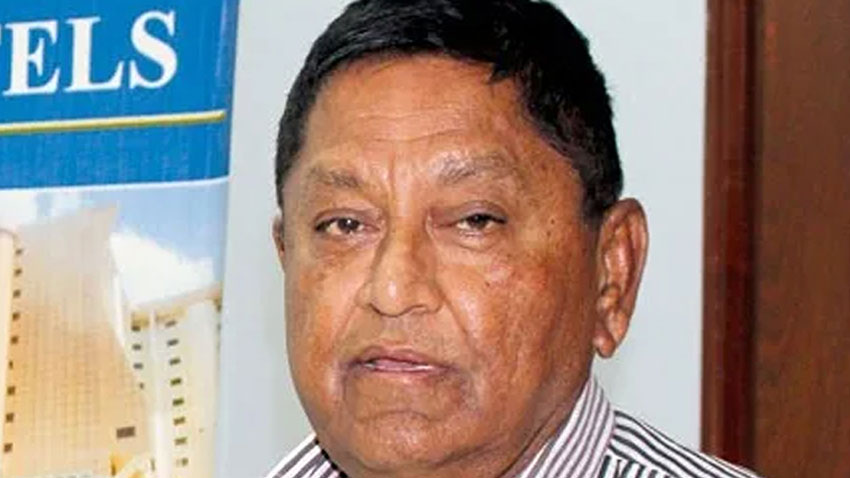
Uganda’s Court of Appeal has dealt a significant financial and reputational blow to businessman Karim Hirji, after it upheld a High Court ruling compelling his company, Imperial Royale Ltd, to refund Shs 5.4 billion to the government for breach of contract during the 2007 Commonwealth Heads of Government Meeting (CHOGM).
A panel of three justices—Moses Kazibwe Kawumi, Irene Mulyagonja, and Oscar John Kihika—dismissed Imperial Royale’s appeal in full, affirming that the Ministry of Foreign Affairs was justified in demanding repayment for services that were never delivered.
In a detailed 32-page judgment, Justice Kawumi noted that the High Court had properly evaluated the evidence showing the hotel was not ready to receive any CHOGM delegates before 18 November 2007, well past the contractual deadlines.
As a result, the court confirmed that Imperial Royale must refund USD 1,464,363.81 (about Shs 5.4bn), with 12% annual interest accruing from the date the suit was filed in 2009.
The Court of Appeal also upheld an additional Shs 800 million in general damages, carrying 23% annual interest, plus the costs of litigation in both courts—bringing the hotel’s total liability to over Shs 6 billion, pending any potential appeal to the Supreme Court.
The dispute dates back to an agreement signed on 15 June 2007, in which the government contracted Imperial Royale to provide accommodation and conference facilities worth USD 2.56 million (approximately Shs 9.5bn) for CHOGM delegates.
However, auditors from Messrs Johnson & Nyende Certified Public Accountants, hired by the Ministry of Foreign Affairs, found the hotel’s facilities incomplete until mid-November 2007, despite payments having been made.
Justice Kawumi cited the audit as credible evidence that government had paid for guaranteed rooms that were not available within the agreed period.
Imperial Royale’s attempts to rely on an occupation permit issued on 24 October 2007 were dismissed by the court as “wanting in evidential value.” The judges also rejected the company’s claims that security restrictions around CHOGM hindered construction, noting that such arguments had not been formally pleaded.
An email from Managing Director Karim Hirji, indicating readiness to host guests, was also deemed inadequate and did not meet the legal threshold for proper notice.
The ruling marks a major setback for Hirji’s Imperial Group, one of Uganda’s largest hospitality conglomerates, which owns several hotels and commercial properties in Kampala and Entebbe.
With interest having accumulated for over 16 years, the financial burden is significant and could affect the group’s liquidity and investment plans.
Unless successfully challenged at the Supreme Court, the decision cements the government’s right to recover the long-disputed funds. It also reinforces judicial expectations that private contractors delivering high-profile national projects must meet contractual obligations or face costly consequences.
For a businessman whose empire has weathered economic swings and industry disruption, the ruling adds pressure at a time when Uganda’s hospitality sector is still rebuilding from recent global shocks.