


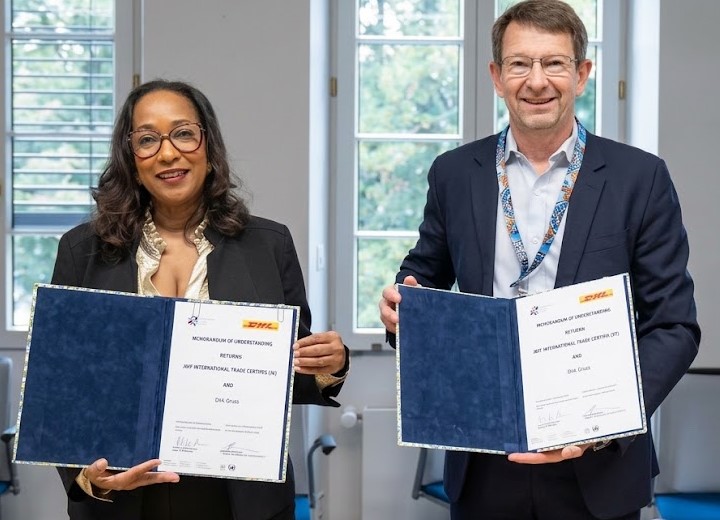
The International Trade Centre (ITC) and DHL have signed a memorandum of understanding to expand support for small and medium-sized enterprises (SMEs), with a particular focus on helping women-led businesses overcome barriers to international trade.
The agreement brings together ITC’s expertise in market intelligence, SME development and inclusive trade with DHL’s global logistics network and technical capabilities, targeting one of the persistent challenges facing smaller businesses: turning access to markets into actual cross-border sales.
SMEs account for about 90% of businesses globally, around 70% of employment and approximately 70% of global GDP. Yet many remain underrepresented in international trade, constrained by challenges including logistics, supply-chain management, access to market information, digital capabilities and the cost and complexity of exporting.
Under the new agreement, ITC and DHL will support SMEs with cross-border exports, supply-chain management and logistics, while working with business-support organisations and ITC SheTrades Hubs to strengthen services available to small and women-led businesses.
The two organisations will also advocate for SMEs and women entrepreneurs in global trade discussions, high-level policy forums and engagements with governments, private-sector organisations and other stakeholders.
The agreement builds on a partnership that dates back to 2016 and has already reached businesses across more than 60 countries in Africa, ASEAN, Latin America and the Caribbean through initiatives including DHL GoTrade, ITC SheTrades and ITC ecomConnect.
Since its launch in 2021, DHL GoTrade projects have reached more than 26,000 SMEs and 8,000 women-owned businesses with training in logistics, e-commerce and international trade.
Through the ITC SheTrades programme, ITC and DHL have supported more than 4,000 women-led businesses across 60 countries with technical assistance, logistics expertise and shipping solutions.
The partnership has also worked through local SheTrades Hubs in countries including Kenya, South Africa, Mauritius and Trinidad and Tobago.
Between 2020 and 2024, the ITC ecomConnect programme connected more than 400 SMEs with DHL support, including preferential shipping arrangements that reduced costs by up to 60% in selected markets.
“For small businesses, the main challenge is not in creating quality products for customers, but getting it to them,” ITC Executive Director Pamela Coke-Hamilton said.
She said the deeper collaboration with DHL would help more SMEs, particularly women-led businesses, overcome logistics barriers, reach new markets and have a stronger voice in trade-policy discussions.
Hennie Heymans, CEO of DHL Express Sub-Saharan Africa, said SMEs remain central to economies worldwide but their participation in international trade remains disproportionately low.
He said businesses often require more than ambition to expand internationally, pointing to the need for access to knowledge, finance, digital capabilities and logistics support.
The partnership, he said, is intended to bring these elements together to create stronger ecosystems through which SMEs can reach new customers and participate more effectively in global trade.
For businesses in emerging markets, the collaboration highlights the growing importance of logistics and digital trade infrastructure in determining whether access to international markets translates into sustainable commercial growth.
Source:DHL