


By Waddell Steven Ainganiza Araalie
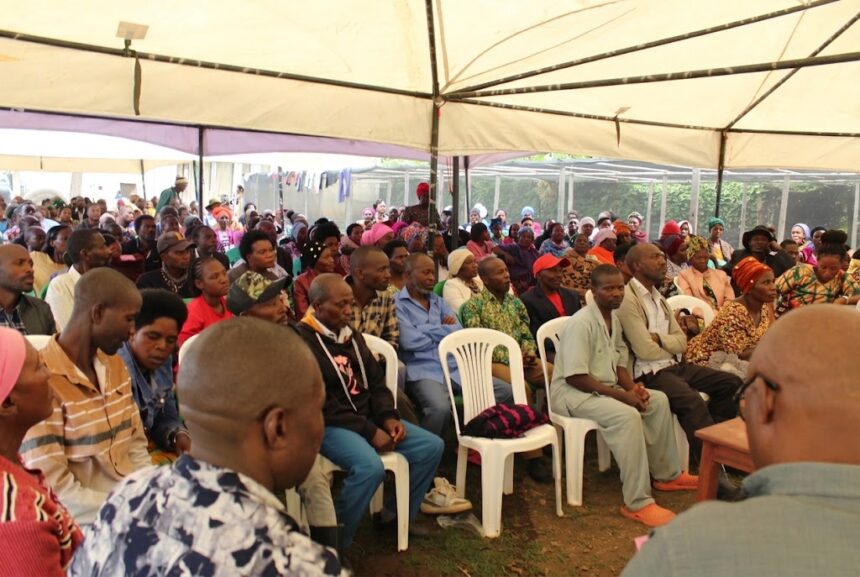
More than 450 barley farmers in Kabarole District are being equipped with improved farming and post-harvest handling skills as stakeholders seek to raise productivity and make barley farming more profitable in the Rwenzori region.
The initiative comes as farmers contend with low yields, rising production costs and what they describe as inadequate prices for their barley.
The training, held at the Nyabuswa Coffee Farmers Association offices in Karangura Sub County, focused on modern cultivation techniques, improved post-harvest handling and measures to reduce losses.
Kirimunda Igisha, a barley farmer from Karangura, said the training had helped farmers understand some of the factors behind persistently low yields, but urged Nile Breweries to review its buying price.
“This session has helped me understand why our yields have remained low for years,” he said. “But we still need fairer prices.”
Farmers currently sell a kilogram of barley for about Shs1,700, which they say is increasingly difficult to sustain given the cost of inputs.
A kilogram of seed, for example, costs about Shs5,000, creating a significant financial burden for farmers before factoring in land, labour and transport costs.
Mutanywana Joseph, an agent with the Rwenzori Barley Farmers Association, said the economics of production are further complicated by expensive land, high transportation costs and the difficult terrain in the Rwenzori region.
Farmers have responded by forming collective associations in an effort to improve their bargaining power, reduce production challenges and strengthen their position in the barley value chain.
Beyond better prices, farmers are also seeking greater support with agricultural inputs and equipment.
Biira Jemimah Lehuka said access to quality farming equipment and fertilisers would help farmers increase yields and improve the quality of barley supplied to buyers.
For farmers who have stayed in the crop for decades, the current price represents significant growth but not necessarily sufficient profitability.
Kalismart Joel, who has grown barley for more than 20 years, said the crop was selling at only Shs250 per kilogram when he started. The price has since increased to Shs1,700, but he said the journey has remained challenging for farmers.
For Nile Breweries, improving barley production is strategically important because the crop is a key raw material for its beer manufacturing operations.
Bob Godden Mutegeki, Agriculture Team Leader for the Western Region at Nile Breweries, said the company works with more than 600 farmers in the region but continues to see low yields.
He said the training was organised to address productivity and post-harvest challenges by giving farmers practical knowledge to improve both production and the quality of barley delivered to the market.
Nile Breweries has partnered with Enabel Uganda on the farmer empowerment programme, with the broader objective of increasing productivity, improving farmer livelihoods and developing a more sustainable barley industry in the Rwenzori region.
The programme highlights a key challenge facing agricultural value chains in Uganda: increasing production alone may not be enough if farmers continue to face high input costs and weak returns.
For Kabarole’s barley farmers, the success of the intervention will ultimately be measured by whether improved farming practices translate into higher yields, lower post-harvest losses and stronger incomes.
With more than 450 farmers already trained, stakeholders are betting that better agronomic practices, stronger farmer organisations and continued private-sector support can help turn barley into a more commercially viable enterprise for communities in the Rwenzori region.